


Motor Accident Claims Tribunals Cannot Exercise 'Pay and Recover' Power for Gratuitous Passengers: Himachal Pradesh HC
 Copy Link
 Share
 Save
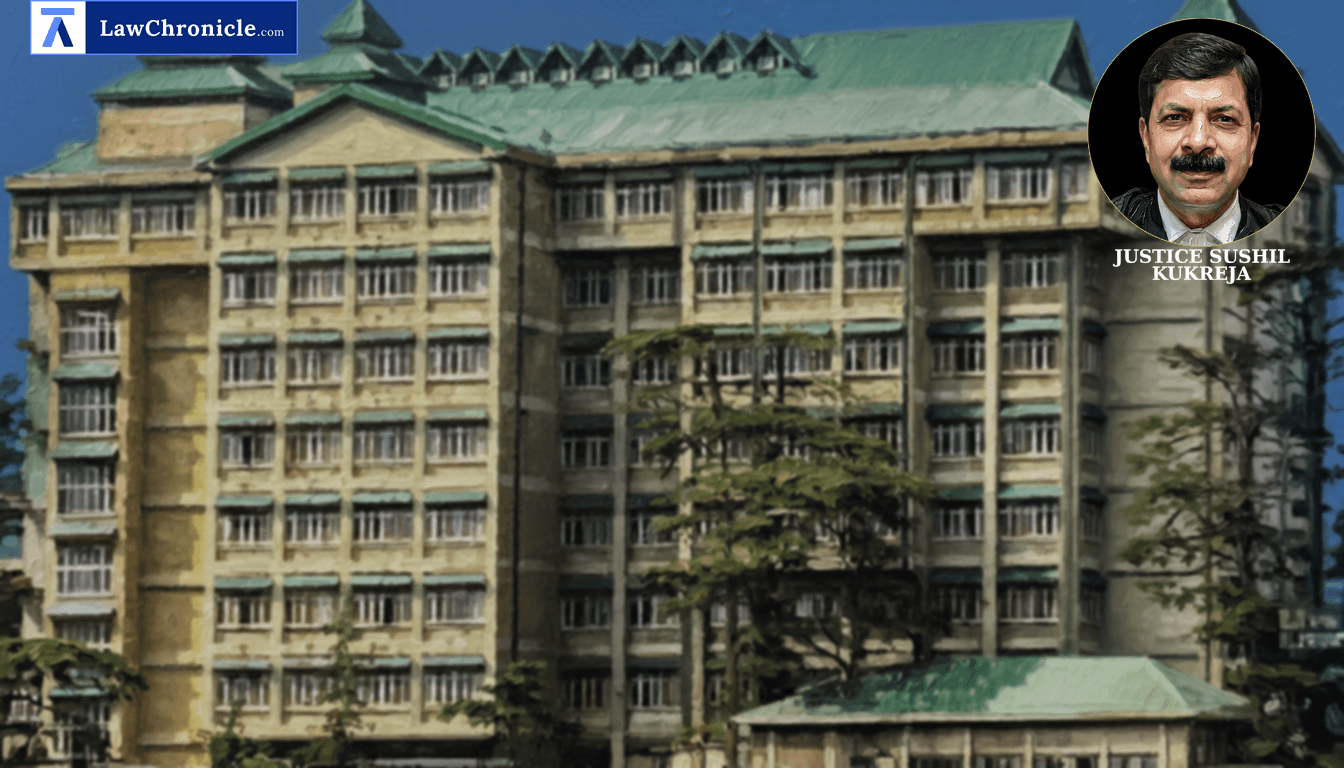
The Himachal Pradesh High Court has restricted the jurisdiction of Motor Accident Claims Tribunals, ruling that they lack the authority to direct insurance companies to pay compensation for gratuitous passengers in goods vehicles with a right to recovery.
In a verdict that shields insurers from unauthorized liabilities, Justice Sushil Kukreja held that the 'pay and recover' principle often applied by the Supreme Court is an exercise of extraordinary jurisdiction under the Constitution of India and cannot be unilaterally adopted by statutory Tribunals where no legal liability exists.
Key Takeaways
Insurers Exempt from Gratuitous Passenger Liability
Insurance companies are not statutorily required to cover risks associated with unauthorized or gratuitous passengers travelling in a goods carriage.
Tribunals Cannot Mimic Supreme Court's Extra-Ordinary Powers
Claims Tribunals do not possess the power to issue 'pay and recover' directions if the insurer has no underlying liability under the Motor Vehicles Act, 1988.
Owner Solely Liable in Goods Carriage Accidents
In cases involving the death or injury of unauthorized passengers in goods vehicles, the liability to satisfy the award rests exclusively with the vehicle owner.
The Limitation of Tribunal's Jurisdiction
The Court examined whether a Tribunal could direct an insurance company to pay compensation despite finding the deceased was a gratuitous passenger. The Court emphasized that while the Supreme Court has occasionally directed insurers to pay and recover, such directions are often rooted in Article 142 of the Constitution of India, a power not available to subordinate Tribunals.
The Court, in its reasoning, observed: "Since such a power is not available to a Claims Tribunal constituted under the Motor Vehicles Act, 1988, as amended, it cannot go against the law settled to the effect that in case of a gratuitous passenger carried in a goods vehicle, the insurance company is not liable to satisfy an award and the owner is the person who shall be liable to pay the compensation and as such, any direction to the insurance company to satisfy the award first and to recover the same from the owner of the vehicle is incongruous."
Interpretation of Section 147 of the Motor Vehicles Act
Analyzing the statutory framework, the High Court referred to the 1994 amendment to Section 147 of the Motor Vehicles Act, 1988. The Court noted that the amendment only expanded coverage to include the owner of the goods or their authorized representative, not arbitrary passengers. Relying on New India Assurance Co. Ltd. vs. Asha Rani and others ( "(2003) 2 SCC 223": 2001 CaseBase(SC) 2729) and National Insurance Company Limited vs. Baljit Kaur and others, the Court reiterated that the term "any person" in Section 147 refers to third parties and does not encompass gratuitous passengers in a goods carriage.
The Court issued the following directions:
"The impugned award stands modified and the owner of the offending vehicle, is liable to satisfy the award and to pay the compensation to the petitioners-claimants. The remaining terms of the impugned award, shall remain the same."
Ratio
Claims Tribunals constituted under the Motor Vehicles Act, 1988 lack the jurisdiction to apply the 'pay and recover' principle in cases involving gratuitous passengers in goods vehicles. As there is no statutory or contractual liability for such passengers under Section 147 of the Act, the insurer cannot be compelled to satisfy the award, and the liability rests solely upon the vehicle owner.
Background
The dispute arose from a fatal accident on May 31, 2017, involving a Mahindra Pick-up. The deceased had hired the vehicle to transport agricultural produce but was later found by the Tribunal to be travelling as an unauthorized/gratuitous passenger. The Tribunal awarded compensation of Rs. 14,79,080/- but directed the Oriental Insurance Company to 'pay and recover' the amount from the owner. The Insurance Company challenged this direction, arguing that once the Tribunal concluded the deceased was a gratuitous passenger, the insurer should have been exonerated completely. The High Court agreed, setting aside the direction against the insurer and holding the owner primarily liable.
Case Details:
Case No.: FAO No. 321 of 2025
Neutral Citation: 2026:HHC:48776
Case Title: The Oriental Insurance Company Ltd. Versus Sumitra Devi & others
Appearances:
For the Petitioner(s): Mr. Jagdish Thakur, Advocate.
For the Respondent(s): Mr. Arvind Negi, Advocate; Dr. Rajesh K. Parmar, Advocate; Mr. Rajesh K. Sharma, Advocate.
Source: 2026 CaseBase(HP) 11177
Similar Articles

 Breaking News


