


Patna HC: Prolonged Detention and Lack of Evidence Secure Bail In AK-47 Smuggling Case
 Copy Link
 Share
 Save
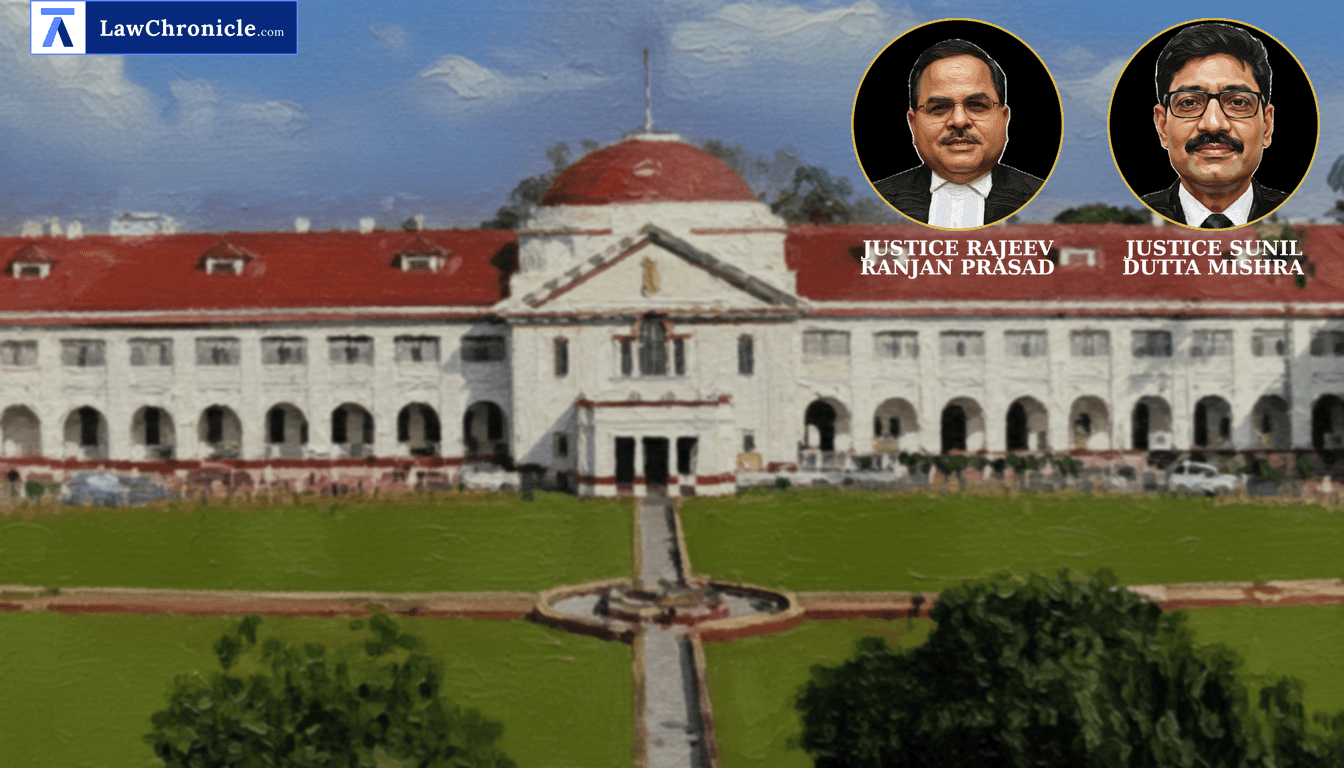
The Patna High Court has dismantled the National Investigation Agency's attempt to prolong the incarceration of an accused in an arms smuggling case, ruling that mere association or travel with a prime suspect does not constitute evidence of involvement in a terrorist conspiracy. By setting aside the denial of bail for an individual held for over two years without a proven digital or financial link to the alleged crime, the Court has reinforced the principle that judicial custody cannot be converted into punitive detention during a sluggish trial.
A division bench comprising Justice Rajeev Ranjan Prasad and Justice Sunil Dutta Mishra heard the appeal challenging the Special NIA Court's refusal to grant bail. The case involved the recovery of an AK-47 rifle and related accessories, leading to charges under the Arms Act, the Indian Penal Code, and the Unlawful Activities (Prevention) Act, 1967.
Key Takeaways
Association vs. Conspiracy
Evidence of familial relationship or shared travel with a primary accused is insufficient to invoke the stringent provisions of the UA(P) Act without corroborating incriminating material.
Trial Delay Overrides Charge Severity
When only two out of ninety-one witnesses have been examined after years of custody, the right to a speedy trial becomes a primary factor for granting bail.
Evidentiary Consistency
Discrepancies in seizure list locations and times, such as claiming recovery at a railway station while the documents show a different village hours later, weaken the prosecution's stance against bail.
Court Observations and Directions
The Court scrutinized the case diary and noted significant discrepancies in the NIA's narrative regarding the appellant's arrest and the subsequent seizure of items. The Court highlighted that the investigation failed to establish any digital connection through Call Detail Records (CDRs) or any suspicious financial transactions between the appellant and the main suppliers of the illegal arms.
The Court, in its reasoning, observed: "In the light of aforesaid material, we have gone through the impugned judgment. It appears that for purpose of rejection of prayer for bail of the appellant, the learned Public Prosecutor for the NIA has made certain submissions which are not borne out of the records i.e. the case diary. For example, the learned APP submitted in the NIA Court that Vikash Kumar (A-1) and Satyam Kumar (A-2) disclosed during interrogation that AK-47 rifle has been given to Dev Mani Rai (A-3). On record, there is no such confessional statement of Satyam Kumar (A-2)."
The Court has following directions:
"(1) He would attend the trial on each and every date fixed by the learned Special Judge, NIA Court. In case of his absence for no plausible reason/ground, the learned trial court shall cancel his bail bond.
(2) He shall not leave the country without permission of the Court. His passport, if any, shall be deposited with the learned trial court."
Ratio
In the absence of financial or digital evidence linking an accused to a criminal conspiracy, and where procedural inconsistencies exist in seizure records, the right to personal liberty under a prolonged trial must prevail over the gravity of allegations under special statutes like the UA(P) Act.
Background
The case originated from a police operation on May 7, 2024, where two individuals were allegedly apprehended at Muzaffarpur Railway Station with components of an AK-47. Subsequent disclosures led to the recovery of a full assault rifle from a bridge. The NIA later took over the probe, adding charges under the Unlawful Activities (Prevention) Act, 1967, alleging the weapons were meant for naxal groups. The appellant argued he was falsely implicated solely for being the cousin of the co-accused and having traveled with him to Nagaland. The High Court found that the prosecution's claims of recovery at the station were not supported by the seizure lists in the case diary and noted the appellant had no prior criminal record and had spent over two years in jail.
Case Details:
Case No.: CRIMINAL APPEAL (DB) No.787 of 2026
CNR No.: BRHC010570922026
Case Title: Satyam Kumar vs. The Union of India through National Investigation Agency, New Delhi
Appearances:
For the Petitioner(s): Mr. Arvind Kumar Mouar, Advocate; Mr. Raj Krishna Jha, Advocate
For the Respondent(s): Mr. Manoj Kumar Singh, Spl.P.P.; Mr. Ankit Kumar Singh, Advocate; Mr. Sanjay Kumar Singh, Advocate; Mr. Pramod Kumar, P.P. (NIA)
Source: 2026 CaseBase(PAT) 3310
Similar Articles

 Breaking News


