


Patna HC Reinstates CISF Constable, Says Punishment Must Not Shock the Conscience
 Copy Link
 Share
 Save
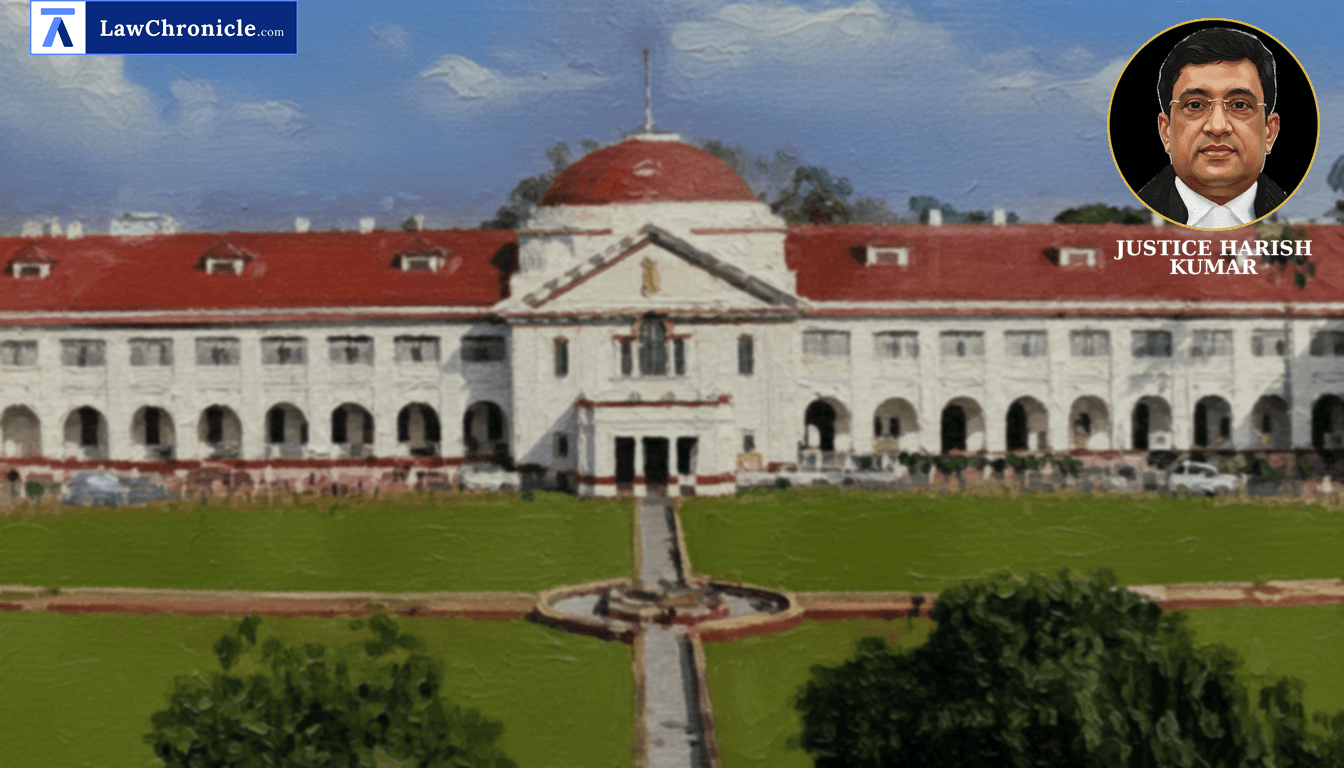
The Patna High Court has dismantled the disciplinary removal of a CISF constable, ruling that a 137-day unauthorized absence triggered by documented spinal ailments does not warrant the 'harsh and punitive' capital punishment of dismissal from service. In a significant intervention against disproportionate sentencing within disciplined forces, the Court held that while discipline is paramount, the law cannot ignore the 'extraordinary compelling circumstances' of a medical crisis.
Justice Harish Kumar presided over the matter, evaluating the legality of the dismissal order passed by the Central Industrial Security Force (CISF) authorities. The Bench was tasked with determining whether the High Court at Patna possessed the territorial jurisdiction to hear the challenge and whether the quantum of punishment was commensurate with the alleged misconduct of overstaying leave.
Jurisdictional Challenge and Cause of Action
The Union of India raised a preliminary objection regarding the maintainability of the writ petition, arguing that since the enquiry and removal took place in Odisha and Chhattisgarh, the Patna High Court lacked territorial jurisdiction. However, the Court rejected this plea, noting that the petitioner was appointed in Patna and underwent medical treatment in Bihar, which constituted a 'fraction of the cause of action' under Constitution of India, 1950.
The Court relied on the principles laid down in Oil and Natural Gas Commission Vs. Utpal Kumar Basu & Ors. ( "(1994) 4 SCC 711": 1994 CaseBase(SC) 292) and Nawal Kishore Sharma Vs. Union of India & Ors. ( "(2014) 9 SCC 329": 2014 CaseBase(SC) 366) to conclude that the service of a rejection notice at the petitioner's native place, where he was forced to stay due to disability, established a sufficient nexus for the Court to exercise jurisdiction. The Bench emphasized that technicalities must not defeat substantial justice.
Court's Observations on Proportionality
The Court noted that the petitioner did not intentionally abandon his duty but was referred to a hospital for serious spinal issues. The Court, in its reasoning, observed: "The imposition of major penalty for remaining absent for 137 days in the facts and circumstances of this case prima facie appears to be too harsh and shocks the conscience of this Court, especially when the petitioner immediately after recovering from the illness submitted his joining and participated in all the proceedings bonafidely."
Drawing a parallel with Yasodhar Kamat Vs. Director General, Border Security Force & Ors. ( "(2021) 13 SCC 333": 2020 CaseBase(SC) 1091) and the Division Bench ruling in Sumit Kumar @ Sumit Kumar Tiwary Vs. The Union of India & Ors., the Court reiterated that the dismissal of a personnel for absence due to medical reasons or family emergencies like cancer treatment is totally disproportionate. The Court has following directions:
"The concerned respondents are hereby directed to reinstate the service of the petitioner, in accordance with law. However, it is made clear that the petitioner shall not be entitled for the salary and other emoluments, the period in which he remained outside the service, which shall though be counted notionally for all other benefits. The unauthorized absence be treated as leave in his credit, as per the provision applicable while imposing any of the minor penalty/warning."
Background:
The petitioner was appointed as a Constable/GD in the CISF in 2017. While undergoing training, he was granted seven days of leave but suffered a serious spinal ailment, leading him to seek treatment at Darbhanga Medical College & Hospital. Despite submitting medical prescriptions and requesting extensions, he was marked for unauthorized absence for 137 days. Following a departmental enquiry, he was removed from service on January 18, 2020. His subsequent appeal and revision were rejected by the higher authorities, prompting the move to the High Court.
The respondents argued that in a disciplined force, unauthorized absence is a serious misconduct and that judicial review should not interfere with the punishment unless there is a procedural infirmity. The High Court, however, found that the 'past conduct' mentioned by authorities was insufficient to justify the ultimate penalty of dismissal in this specific instance.
Key Takeaways:
Doctrine of Proportionality
High Courts can interfere with administrative punishments if the penalty 'shocks the conscience' and is wildly disproportionate to the misconduct.
Territorial Jurisdiction Clarified
Receipt of termination or rejection notices at a native place, combined with medical treatment in that state, allows High Courts to entertain writ petitions under Article 226(2).
Medical Emergencies vs. Desertion
There is a vital legal distinction between 'absconding' from duty and 'overstaying' due to documented medical incapacitation.
Ratio Decidendi:
The dismissal of a member of a disciplined force for unauthorized absence is unsustainable and disproportionate if the absence was caused by genuine, documented medical emergencies and the delinquent attempted to communicate their condition to the authorities. Such cases warrant a sympathetic approach rather than the maximum penalty of removal from service.
Case Details:
Case No.: Civil Writ Jurisdiction Case No.9942 of 2020
Case Title: Navneet Kumar Yadav v. Union of India & Others
Appearances:
For the Petitioner(s): Mr. Suraj Narain Yadav, Adv., Mrs. Pooja Shree, Adv., Mr. Masoom Alam, Adv., Mr. Niraj Prasad Sinha, Adv.
For the Respondent(s): Mr. Awadhesh Kumar Pandey, Sr. CGC, Mr. Arvind Kumar, CGC, Mr. Lokesh, Adv.
Source: 2026 CaseBase(PAT) 10

 Breaking News


