


Paucity of Funds No Ground to Withhold Admitted Contractual Dues: Allahabad HC
 Copy Link
 Share
 Save
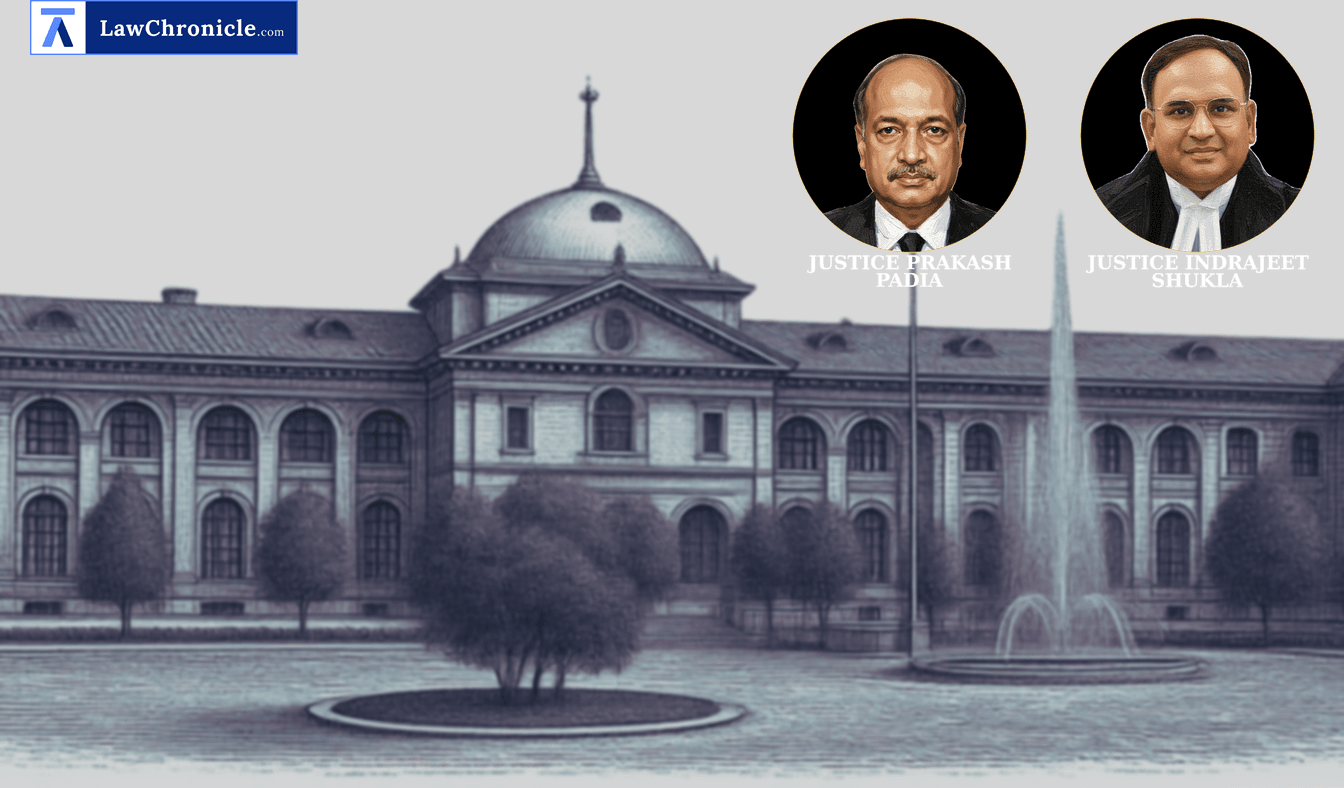
The Allahabad High Court has ruled that the government cannot evade its liability to pay admitted contractual dues by citing financial constraints or administrative difficulties. The Bench declared such excuses as legally unsustainable, emphasizing that the obligation to pay for services rendered is a recurring duty that protects the right to life and livelihood.
Justice Prakash Padia and Justice Indrajeet Shukla, while adjudicating a petition concerning unpaid security service fees, clarified the critical distinction between the 'maintainability' and 'entertainability' of writ petitions in contractual disputes. The bench observed that while High Courts typically avoid private law disputes, the doors of Article 226 remain open when the State acts arbitrarily by withholding undisputed payments.
Key Takeaways
Financial Crisis No Defence
State entities cannot shirk crystallised financial obligations by pleading a lack of funds or budgetary sanctions once they have accepted the benefits of work executed.
Maintainability vs Entertainability
While a writ is maintainable due to the plenary nature of Constitution of India, 1950, its entertainment is a matter of judicial discretion, particularly where liability is admitted and no complex evidence is required.
Unjust Enrichment Prohibited
State instrumentalities are barred from unjustly enriching themselves at the cost of private citizens, as restitution is an equitable remedy distinct from contract or tort.
Interest on Delayed Payments
Failure to liquidate admitted dues promptly entitles the claimant to interest, compensating for the loss of use of money over time.
Writ Jurisdiction and Contractual Dues
The Allahabad High Court noted that the power to issue writs under Constitution of India, 1950 is plenary and not restricted by the existence of alternative remedies, though courts impose self-restrictions. Relying on Godrej Sara Lee Ltd.vs. Excise and Taxation Officer-cum-Assessing Authority and others, the bench highlighted that the rule of exhausting statutory remedies is one of policy and convenience rather than law.
Further, the bench referenced M/s Radha Krishan Industries v. State of Himachal Pradesh and Others ( "(2021) 6 SCC 771": 2021 CaseBase(SC) 1575) and M/s Utkal Highways Engineer and Contractors v. Chief General Manager ( "2025 SCC OnLine SC 1400": 2025 CaseBase(SC) 6840) to establish that non-payment of admitted dues constitutes arbitrary action. The Allahabad High Court highlighted that “Paucity of funds, as is often pleaded by State instrumentalities, cannot constitute a valid ground for withholding admitted contractual dues. The obligation to discharge such contractual dues is a continuing and recurring obligation... once a legal right has been established... it is not within the realm of permissible actions for the State to refuse payment of the same on account of financial inability/paucity of funds.”
Ratio
A writ petition under Constitution of India, 1950 is maintainable and entertainable for the recovery of monetary claims arising out of a contract when the liability is unequivocally admitted by the State or its instrumentalities. Financial constraints, paucity of funds, or internal administrative deficiencies do not constitute a legally sustainable defense for withholding such admitted dues, as the State cannot be permitted to unjustly enrich itself at the expense of a citizen.
Background
The petitioner, a security service firm, was awarded a tender to provide manpower to a cooperative dairy federation. While the services were rendered from 2018 to 2021, the federation failed to clear outstanding dues amounting to over Rs. 18 lakhs. The respondents admitted the liability in their counter-affidavit but argued they were unable to pay due to "financial difficulties and lack of money."
The Allahabad High Court examined several precedents, including M/s Jaiswal Foods through its Proprietor Sudheer Jaiswal v. State of U.P. through Additional Chief Secretary, Department of Basic Education, Government of U.P., Lucknow and others, State of West Bengal v. Confederation of State Government Employees, West Bengal ( "(2026) 6 SCC 641": 2026 CaseBase(SC) 104), and M/s Lumber India Corporation v. Union Territory of J&K and Others, which condemned the practice of withholding dues on the pretext of funds. The bench applied the principles from ABL International Ltd. v. Export Credit Guarantee Corporation of India Ltd. ( "(2004) 3 SCC 553": 2003 CaseBase(SC) 82) to conclude that since no roving inquiry into facts was needed, the writ jurisdiction was appropriate.
Case Details:
Case No.: WRIT - C No. - 28222 of 2022
Case Title: M/s Purv Sainik Security Service Versus State of U.P. and 4 others
Appearances:
For the Petitioner(s): Arvind Srivastava Iii, Advocate; Vaishnavi Tripathi, Advocate
For the Respondent(s): CSC; Ganesh Datt Mishra, Advocate
Source: 2026 CaseBase(ALL) 1199
Similar Articles
 Breaking News


