


Power of Attorney Cannot Depose Personal Knowledge of Principal in Specific Performance Suits: Calcutta HC
 Copy Link
 Share
 Save
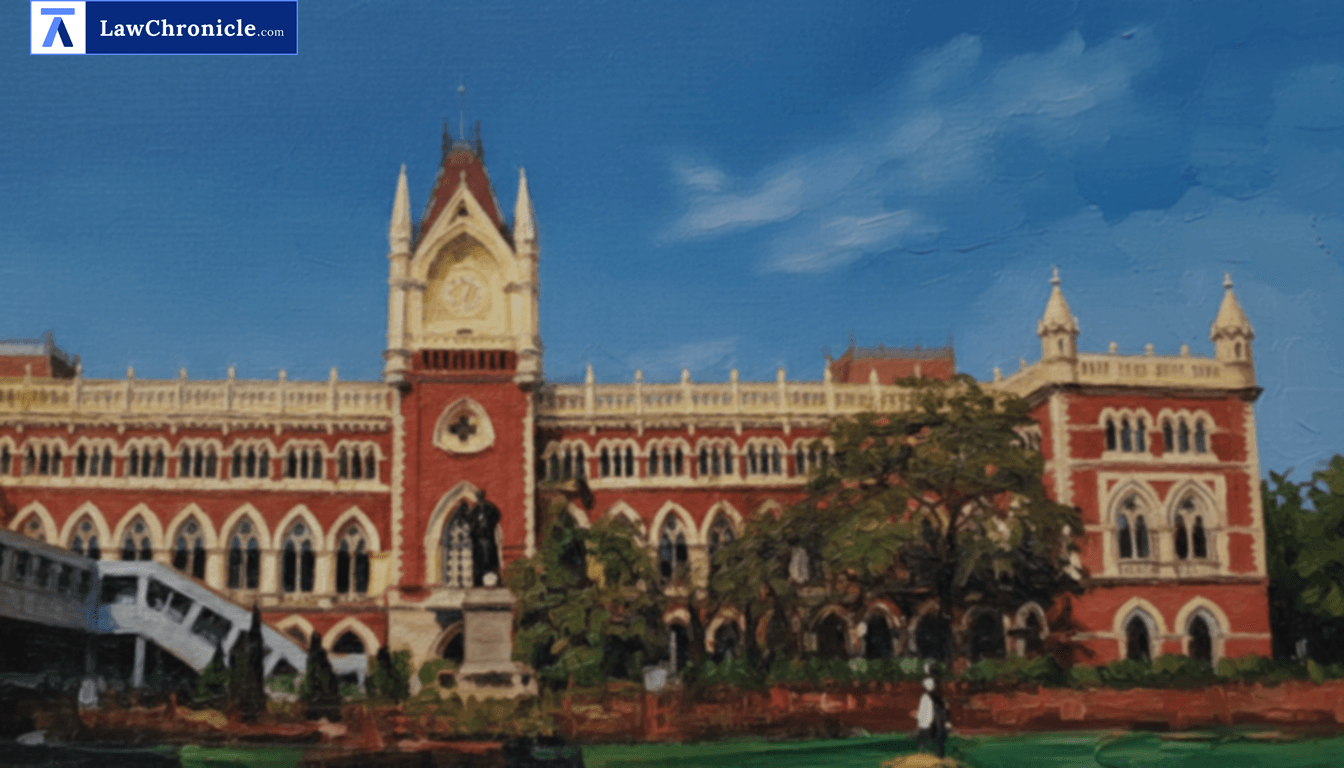
The Calcutta High Court has reinforced the strict evidentiary standards in specific performance suits, ruling that a Power of Attorney holder cannot substitute the plaintiff to prove 'readiness and willingness' if they lack personal knowledge of the transaction. The court underscored that continuous readiness is a personal attribute that must be substantiated by the party directly involved, effectively barring agents from testifying on matters exclusive to the principal's state of mind and financial capacity.
A Division Bench comprising Justice Ravi Krishan Kapur and Justice Atarup Banerjee heard the appeal challenging a trial court's dismissal of a suit for specific performance. The primary legal question was whether the testimony of a brother, acting as a Power of Attorney holder, was sufficient to prove the plaintiff's readiness and willingness to perform his part of a contract involving the sale of a property in Bankura.
Key Takeaways
Mandatory Personal Testimony
Litigants seeking specific performance must personally step into the witness box to prove their willingness, as an agent cannot depose for the principal's personal knowledge.
Strict Interpretation of Order III CPC
The term 'acts' under the Code of Civil Procedure, 1908 is confined to procedural or representative actions and does not include the act of giving evidence on behalf of another.
Condition Precedent for Relief
Continuous readiness and willingness is a key relevant fact that must be proved from the date of execution until the date of the decree to succeed under Section 16(c) of the Specific Relief Act, 1963.
Court Observations on Readiness and Willingness
The Court observed that in a suit for specific performance, it is incumbent on the plaintiff to both aver and prove that he has always been ready and willing to perform the essential terms of the contract. The Bench noted that while 'readiness' refers to financial capacity, 'willingness' relates to the conduct of the plaintiff, a distinction highlighted in the precedent R. Shama Naik vs. Srinivasiah.
The Court has following directions:
"The instant appeal being F.A. 262 of 2012 is dismissed. The Registry is directed to return the Trial Court Records to the concerned Court. There shall be no order as to costs."
Evaluating the role of a Power of Attorney, the Court, in its reasoning, observed: "The term 'acts' would not include deposing in place and instead of the principal. In other words, if the power of attorney holder has rendered some 'acts' in pursuance to power of attorney, he may depose for the principal in respect of such acts, but he cannot depose for the principal for the acts done by the principal and not by him. Similarly, he cannot depose for the principal in respect of the matter which only the principal can have a personal knowledge and in respect of which the principal is entitled to be cross-examined."
Ratio
In a suit for specific performance under the Specific Relief Act, 1963, a Power of Attorney holder may only depose in respect of acts done by them pursuant to the conferred power; they are legally incompetent to testify in place of the principal regarding matters of personal knowledge, such as the principal's continuous readiness and willingness to perform the contract.
Background
The dispute originated from an agreement for sale executed in 2004 by one Baibarta Debya in favor of the appellant, Manoj Kumar Agarwala. The consideration was fixed at Rs. 5,00,000, and despite a partial payment of Rs. 60,000 to the successors after Debya's death, the sale deed was not executed. The respondents argued that the suit was barred under Section 34 of the Specific Relief Act, 1963 and that the property was subject to a Will for which probate had been granted.
During the trial, the appellant's brother deposed as a Power of Attorney holder. The trial court dismissed the suit, holding that the appellant failed to prove his readiness and willingness as he did not personally adduce evidence. The High Court, while dismissing the appeal, relied on Janki Vashdeo Bhojwani vs. IndusInd Bank Ltd. ( "(2005) 2 SCC 217": 2004 CaseBase(SC) 255), Mahinder Kaur vs. Sant Paul Singh ( "(2019) 9 SCC 358": 2019 CaseBase(SC) 2140), and Rajesh Kumar vs. Anand Kumar ( "2024 SCC OnLine SC 981": 2024 CaseBase(SC) 72) to affirm that the authority to 'act' on behalf of a principal does not entitle an attorney to substitute themselves as a witness for matters within the principal's personal knowledge. The Bench concluded that the appellant failed to meet the evidentiary burden required under Section 16(c) of the Specific Relief Act, 1963.
Case Details:
Case No.: FA 262 of 2012
Neutral Citation: 2023:CHC-AS:15778-DB
Case Title: Sri Manoj Kumar Agarwala Vs. Sri Omprakash Brajabasi & Another.
Appearances:
For the Petitioner(s): Mr. Sounak Bhattacharya, Adv., Mr. Sounak Mondal, Adv., Mr. Abhirup Halder, Adv., Mr. Anirban Saha Roy, Adv., Mr. Bipasha Bhattcharyya, Adv.
For the Respondent(s): Mr. Agniva Mandal, Adv., Mr. Nitish Samanta, Adv., Ms. Shreyashee Mitra, Adv.
Source: 2026 CaseBase(CAL) 2954
Similar Articles
 Breaking News


