


Private College Service Disputes Beyond Writ Jurisdiction: Patna High Court
 Copy Link
 Share
 Save
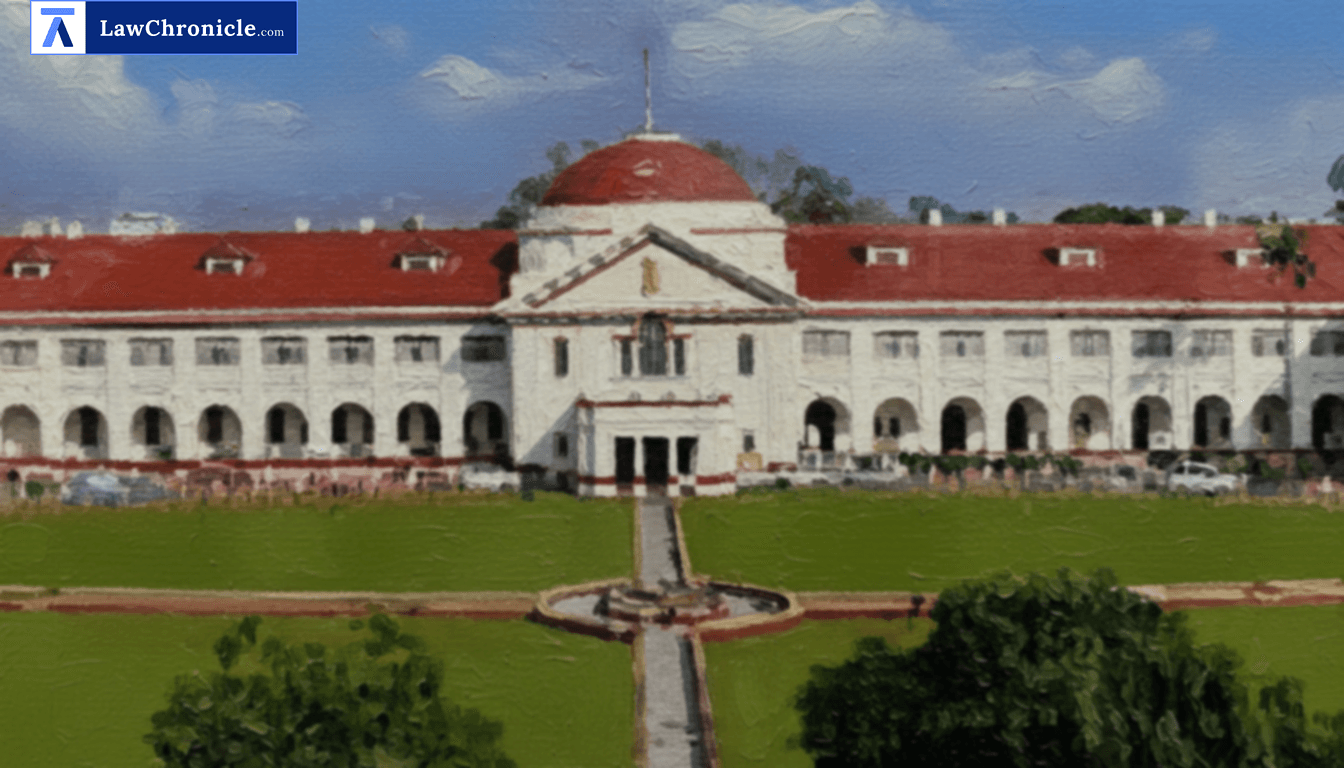
The Patna High Court has slammed the door on writ petitions involving service disputes in private affiliated colleges, ruling that such institutions do not qualify as 'State' and their internal employment contracts lack the necessary 'public law element' for judicial review. This decisive verdict clarifies that termination of staff in the private educational realm remains a matter of private contract, insulating affiliated units from extraordinary constitutional challenges unless a breach of statutory duty is specifically established.
Justice Ritesh Kumar, presiding over the bench, delivered this significant ruling while adjudicating a challenge against a termination order issued by a B.Ed. college. The Court was tasked with determining whether a writ of mandamus could be issued against an affiliated college in matters of personal service contracts.
Contractual Disputes Lack Public Law Element
Determining the maintainability of the petition, the Court observed that for an action to be amenable to Article 226 of the Constitution of India, there must be a direct nexus with the discharge of a public duty. The Court noted that even if an institution performs the public function of imparting education, its internal management and disciplinary actions against employees fall within the private realm.
The Court, in its reasoning, observed: "Individual wrongs or breach of mutual contracts without having any public element as its integral part cannot be rectified through a writ petition under Article 226 of the Constitution of India. Wherever Courts have intervened in their exercise of jurisdiction under Article 226 of the Constitution of India, either the service conditions were regulated by the statutory provisions or the employer had the status of 'State' within the expansive definition under Article 12 of the Constitution of India or it was found that the action complained of has public law element."
Distinction Between Public Duty and Private Employment
Expanding on the nature of employment in private unaided schools, the Court emphasized that the terms of contract between the management and staff are not inseparable parts of the obligation to impart education. Relying on recent Supreme Court precedents, the Court held that unless the removal is regulated by statutory provisions, the matter remains in the realm of an ordinary contract of service.
The Court has the following directions:
"The writ petition filed by the petitioner is thoroughly misconceived and is accordingly dismissed. Pending application, if any, shall also stands disposed of."
Background:
The dispute arose when the petitioner, an Assistant Professor at M.M. Rahmani, B.Ed. College, Begusarai, challenged his termination letter dated May 7, 2022. He alleged that his services were terminated illegally, contrary to law, and without a proper inquiry. He sought reinstatement with all consequential benefits and a restraint on the college from filling the vacancy.
The college, an affiliated unit of Patliputra University, raised a preliminary objection regarding the maintainability of the writ. They argued that as a private affiliated college, it did not fall under the definition of 'State' as per Article 12 of the Constitution of India. The petitioner countered by citing Andi Mukta Sadguru Shree Muktajee Vandas Swami Suvarna Jayanti Mahotsav Smarak Trust & Ors. versus V. R. Rudani and Ors. ( "(1989) 2 SCC 691": 1989 CaseBase(SC) 369) and Ramesh Ahluwalia v. State of Punjab & Ors. ( "(2012) 12 SCC 331": 2012 CaseBase(SC) 350), arguing that even private bodies performing public functions are amenable to writ jurisdiction.
However, the Court noted that the principles in Ramesh Ahluwalia v. State of Punjab & Ors. ( "(2012) 12 SCC 331": 2012 CaseBase(SC) 350) were later held to be per incuriam in St. Mary’s Education Society & Another Vs. Rajendra Prasad Bhargava & Ors. ( "(2023) 4 SCC 498": 2022 CaseBase(SC) 1155). Furthermore, the Court distinguished Marwari Balika Vidyalaya versus Asha Srivastava & Ors. ( "(2020) 14 SCC 449": 2019 CaseBase(SC) 2874) and relied heavily on the more recent holdings in St. Mary’s Education Society & Another Vs. Rajendra Prasad Bhargava & Ors. ( "(2023) 4 SCC 498": 2022 CaseBase(SC) 1155) and Army Welfare Education Society, New Delhi versus Sunil Kumar Sharma & Ors. ( "(2024) 16 SCC 598": 2024 CaseBase(SC) 608). The Court concluded that since no element of public law was agitated and the action was essentially of a private character, the writ was not maintainable.
Key Takeaways:
Narrowing Writ Access
Affiliated private colleges are generally immune from writ petitions in service matters unless there is a specific violation of a statutory provision governing service conditions.
Clarifying 'Public Function'
Imparting education is a public function, but the administrative act of firing an employee is a private contractual act lacking the 'public law element' required for Article 226 of the Constitution of India.
Primary Remedy in Civil Courts
Employees of private educational institutions must seek remedies through civil suits or specialized tribunals rather than Constitutional Courts for termination or suspension disputes.
Ratio Decidendi:
A writ petition under Article 226 of the Constitution of India is not maintainable against a private affiliated college in matters of personal service contracts (such as termination) because such institutions do not constitute 'State' under Article 12 and such disputes lack a 'public law element', provided the service conditions are not governed by statutory provisions.
Case Details:
Case No.: Civil Writ Jurisdiction Case No. 9161 of 2022
Case Title: Abhshek Kumar v. The State of Bihar & Ors.
Appearances:
For the Petitioner(s): Mr. Krishna Kant Singh, Advocate
For the Respondent(s): Mr. Shankar Kumar Thakur, AC to GP-27; Mr. Ravi Bhardwaj, Advocate; Mr. Iqbal Asif Niazi, Advocate; Mr. Suresh Mishra, Advocate
Source: 2026 CaseBase(PAT) 25
Similar Articles
 Breaking News


