


Private Employment Disputes in Religious Committees Not Amenable to Writ Jurisdiction: Madhya Pradesh HC
 Copy Link
 Share
 Save
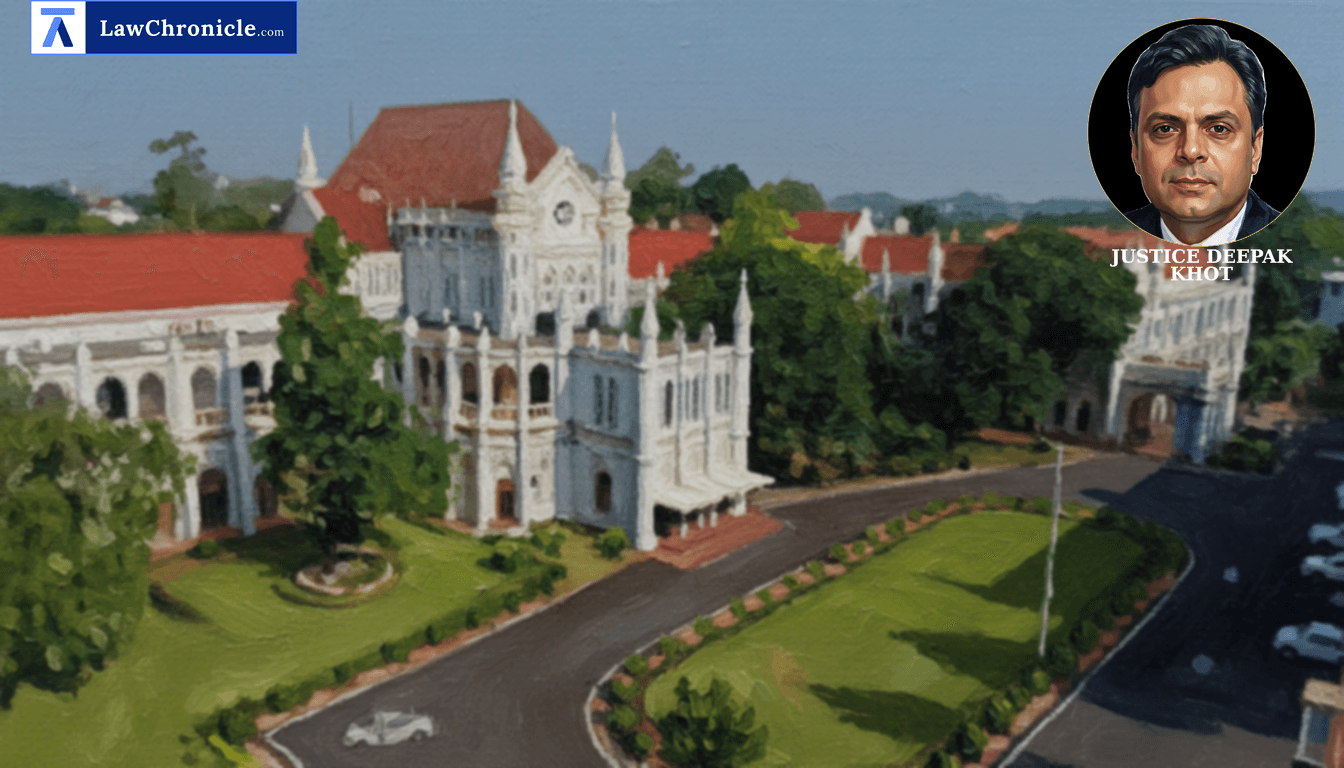
The Madhya Pradesh High Court has clarified that disputes involving the vacation of premises or termination of services by a local Masjid Committee do not involve a public law element and thus cannot be challenged through a writ petition. Justice Deepak Khot ruled that such matters constitute private disputes beyond the scope of Article 226 of the Constitution of India.
In a case involving the removal of a Mivazin from his quarters, the High Court observed that the relationship was governed by specific terms of appointment and did not qualify as a dispute between the State and its employee. The Court emphasized that for a writ to be maintainable against a non-statutory body, the grievance must involve a duty governed by statute or a public law element.
Masjid Committee Not 'State' Under Article 12
The petitioner had approached the Court seeking to quash an order dated 15.11.2012 passed by the Secretary of the Masjid Committee, arguing that the committee falls under the definition of 'State' under Article 12 of the Constitution of India. However, the Court found that the petitioner failed to demonstrate that the committee was under the absolute control or financial aid of the Waqf Board.
Referring to the nature of the dispute, the Court, in its reasoning, observed: "In the present case in hand, from the perusal of the impugned order, it seems that it is an order of vacation of a room given to the petitioner which he has been occupying in the Masjid for rendering services to the Masjid. It cannot be said to be any service dispute of a body wherein any public law element is involved. It is absolutely a private dispute which cannot be agitated under the writ jurisdiction enshrined under Article 226 of the Constitution of India."
Public Law Element Essential for Writ Jurisdiction
The Court analyzed several precedents to determine the boundaries of writ jurisdiction. While acknowledging the principle laid down in Andi Mukta Sadguru Shree Muktajee Vandas Swami Suvarna Jayanti Mahotsav Smarak Trust v. V.R. Rudani ( "(1989) 2 SCC 691": 1989 CaseBase(SC) 369), which allows writs against non-statutory bodies performing public duties, the Court noted that the current dispute was purely contractual and private.
Similarly, the Court examined Pearlite Liners (P) Ltd. vs. Manorama Sirsi, which establishes that contracts for personal services cannot be specifically enforced except in three limited exceptions: removal of a public servant in violation of Article 311, reinstatement under industrial law, or breach of mandatory statutory provisions by a statutory body. The petitioner failed to meet any of these exceptions.
Background:
The petitioner, Mohammad Zakir, was appointed as a Mivazin at Nazmul Masazid and was provided a room for occupation under an agreement dated 23.12.2010. The agreement stipulated that the petitioner could be asked to vacate the premises when necessity arose. Subsequently, the committee issued a show-cause notice and passed an order for his dispossession and removal from service.
The petitioner challenged these orders, relying on Abdul Naeem Khan vs. Rajasthan Board of Muslim Wakfs to argue that Waqf Board employees can invoke writ jurisdiction. The respondents raised a preliminary objection, asserting that the petitioner had an efficacious alternative remedy under Section 83(2) of the Waqf Act. The Court ultimately agreed with the respondents, finding no violation of natural justice and concluding that the dispute was a private matter governed by the terms of appointment.
Case Details:
Case No.: WRIT PETITION No. 14348 of 2014
NeutralCitation: 2026:MPHC-JBP:36406
Case Title: MOHAMMAD ZAKIR Versus M.P. WAQF BOARD AND OTHERS
Appearances:
For the Petitioner(s): Shri Aakash Lalwani - Advocate
For the Respondent(s): Shri Utkarsh Agrawal - Advocate
Source: 2026 CaseBase(MP) 43
Similar Articles
 Breaking News


