


Property Identification not mandatory for Counter-Claim under CPC: Bombay HC
 Copy Link
 Share
 Save
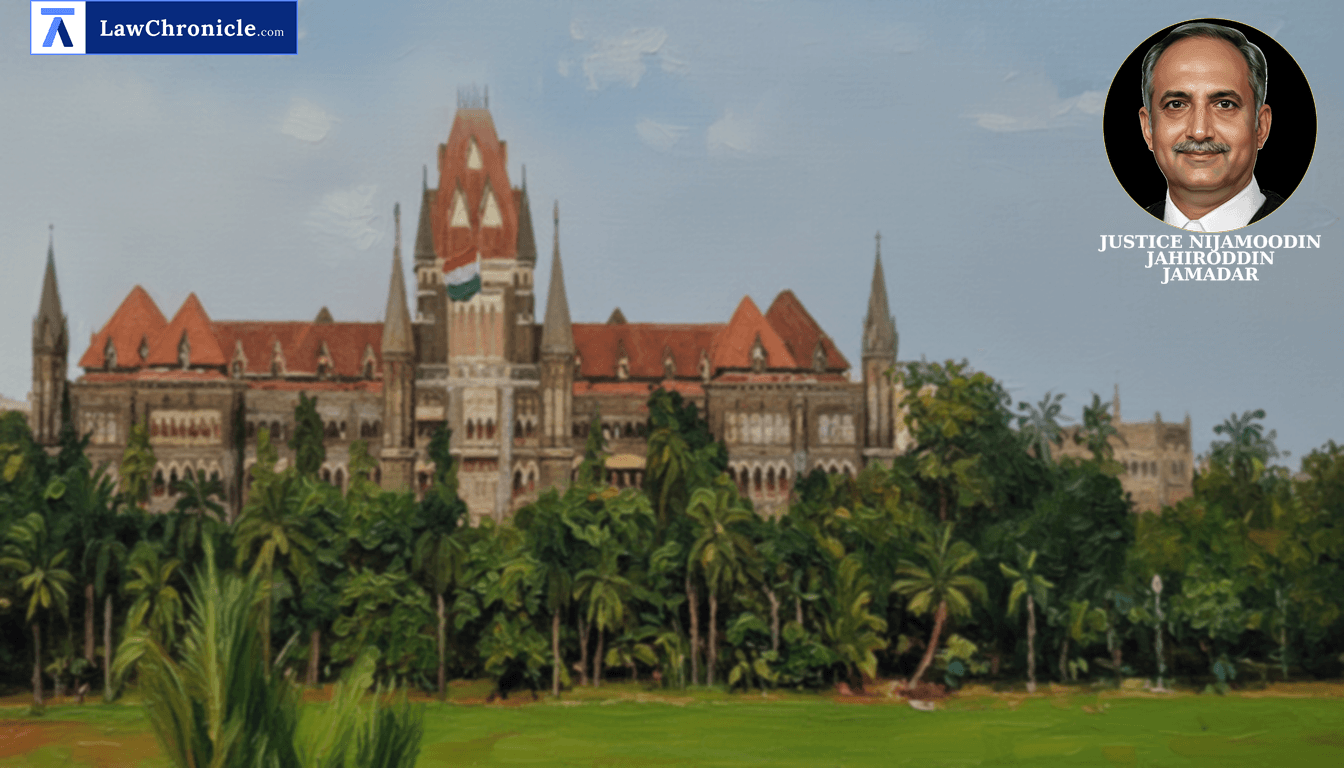
The Bombay High Court has fortified the procedural rights of defendants by ruling that a counter-claim under CPC cannot be excluded simply because the properties involved are not identical to those in the original suit. Overturning a trial court's restrictive interpretation, the Bench held that the primary objective of Code of Civil Procedure, 1908 is to prevent multiplicity of proceedings by resolving all disputes between the same parties in a single trial.
Justice N. J. Jamadar presided over the civil revision application which challenged an order passed by the Civil Judge, Palghar. The trial court had excluded a counter-claim filed by the applicant under Order VIII Rule 6-C of the Code of Civil Procedure, 1908, reasoning that there was no nexus or physical overlap between the suit properties and the counter-claim properties.
Key Takeaways
Nexus Not a Prerequisite
While the trial court demanded property identification, the High Court clarified that a counter-claim can stem from an independent cause of action unrelated to the plaintiff's original claim.
Judicial Discretion Limits
Trial courts must exercise discretion under Order VIII Rule 6-C judiciously; the mere wish or 'ipse dixit' of a plaintiff to exclude a counter-claim is not binding on the court.
Efficiency Over Formalism
The ruling prioritizes the legislative intent of avoiding fragmented litigation and conflicting judicial orders by encouraging joint determination of claims and cross-claims.
Legal Tenability of Independent Counter-Claims
The Bombay High Court analyzed the phraseology of Order VIII Rule 6-A, noting that the right to file a counter-claim emanates from the cause of action and not necessarily the identity of the subject matter. The Bench highlighted that Rule 6-A contains a clear intendment to allow "any right or claim" provided it accrues before the delivery of defense. Referring to the precedent in Jag Mohan Chawla And Anr Vs Dera Radha Swami Satsang and Ors ( "(1996) 4 SCC 699": 1996 CaseBase(SC) 1406), the Bombay High Court noted that a counter-claim under CPC need not relate to or be connected with the original cause of action pleaded by the plaintiff. The Bench observed that the trial court applied an incorrect legal test by insisting on the identity of properties.
Court's Rationale on Statutory Interpretation
The Bombay High Court emphasized a harmonious reading of the Code, stating that one provision cannot be interpreted in isolation to defeat the broader objective of the statute. Relying on Reserve Bank of India Vs Peerless General Finance & Investment Co. Ltd., & ors., the Court stressed that interpretation must depend on both text and context to fit the entire legislative scheme. The Bench observed that “By giving primacy to the provisions contained in Order VIII Rule 6-C of the Code and the wishes of the plaintiff, an interpretation which defeats the object of avoiding the multiplicity of the proceedings and ensuring the determination of all the questions in controversy between the parties in the same proceeding by trying the suit and the cross-suit, cannot be adopted.”
Ratio
The identity of the property is not a mandatory requirement for the maintainability of a counter-claim under Order VIII Rule 6-A of the Code of Civil Procedure, 1908. A defendant may set up a counter-claim based on a separate or independent cause of action against the plaintiff, and such claims should generally be tried together to avoid multiplicity of proceedings and conflicting decrees, unless significant complexity or protraction justifies exclusion under Rule 6-C.
Background
The dispute originated from RCS No. 35 of 2026, where Respondent No. 1 (Plaintiff) sought a perpetual injunction to protect suit properties in Mouje Palghar from alleged encroachment by the Defendants. The Defendants (Applicants) filed a written statement along with a counter-claim, asserting ownership over adjoining lands and seeking a declaration of title.
The Plaintiff moved an application to exclude the counter-claim, arguing it concerned different survey numbers and was unconnected to the main suit. The trial court agreed, citing a lack of nexus. However, the Bombay High Court found that the Plaintiff’s own pleadings identified the counter-claim properties as forming the northern boundary of the suit site, establishing a clear factual connection. The Bombay High Court concluded that excluding the counter-claim would lead to redundant litigation and the risk of inconsistent findings.
Case Details:
Case No.: CIVIL REVISION APPLICATION NO. 409 OF 2026
Neutral Citation: 2026:BHC-AS:39681
Case Title: M/s Ganesh Land Developers & Construction Private Limited vs. Shradhha Realtors & Ors.
Appearances:
For the Petitioner(s): Mr. Sanjiv Sawant, with Bhakti Wast, i/b Samir Suryawanshi
For the Respondent(s): Mr. Sumit Kothari for R-1; Mr. Juzer Udaipuri with Sofia Udaipuri and Firdaus Udaipuri for R-2 to R-5
Source: 2026 CaseBase(BOM) 6500
Similar Articles
 Breaking News


