


Severe Punishment and Heinous Nature of Offence Grounds for Bail Refusal: Himachal Pradesh HC
 Copy Link
 Share
 Save
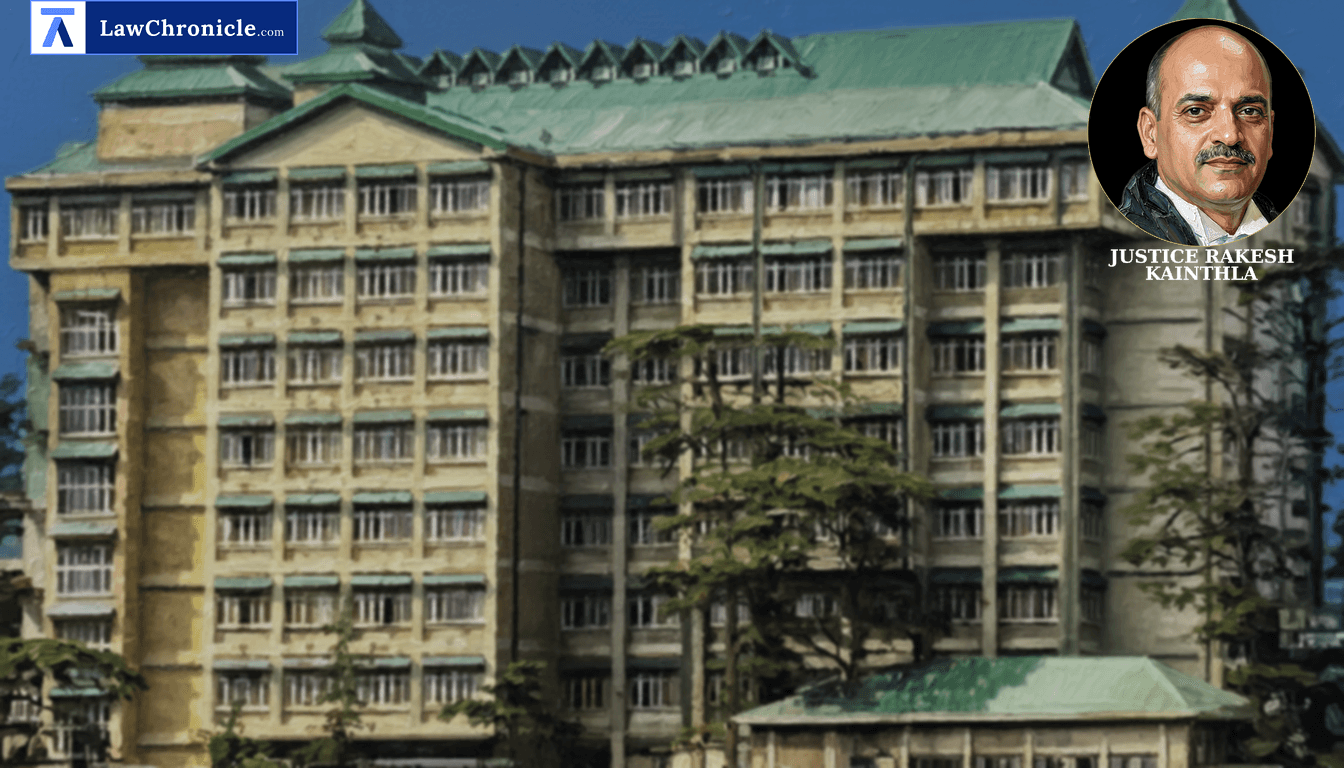
Driving under the influence of drugs and inflicting life-threatening knife injuries on public transport workers constitutes a heinous crime that precludes the grant of bail due to the severity of potential punishment. The High Court of Himachal Pradesh has reinforced that judicial discretion in bail matters must prioritize the nature of the charge and the gravity of the accusations over the mere length of the trial.
In a significant determination regarding personal liberty and public safety, Justice Rakesh Kainthla dismissed a regular bail petition filed by an individual accused of a violent road-rage incident involving Volvo bus drivers. The court underlined that when a crime is of high magnitude and carries a potential life sentence, the risk of the accused absconding remains a primary concern for the judiciary.
Key Takeaways
Severity Over Personal Liberty
When the nature of the charge is heinous and the punishment is severe, such as life imprisonment, the court may reasonably presume that bail will not secure the presence of the accused at trial.
Influence of Narcotics in Crimes
Possession of intermediate quantities of drugs and presence of narcotics in the blood sample significantly strengthen the prosecution's case against the grant of bail in violent offences.
Judicial Discretion Parameters
Bail is not a matter of course but a judicious exercise of discretion based on well-settled principles including the character of the accused and the larger interest of the public.
Trial Expediency
Granting bail solely on the ground of a large number of prosecution witnesses is premature if the Trial Court shows active concern for conducting an expeditious trial.
Court's Rationale on Gravity of Offence
The court scrutinized the allegations where the petitioner, while driving a Thar vehicle in a zigzag manner, blocked and reversed into a Volvo bus before inflicting knife injuries on the stomach and chest of various victims. The bench noted that medical reports classified these injuries as "dangerous to life," attracting the rigours of Section 109(1) of the Bharatiya Nyaya Sanhita (BNS) 2023.
The Court, in its reasoning, observed: "...the petitioner is not entitled to bail considering the severity of the punishment. The offence punishable under Section 109(1) can result in imprisonment for life when the hurt is caused. Therefore, the nature of the offence is heinous, and the punishment is severe. It was laid down by the Hon’ble Supreme Court in Gudikanti Narasimhulu v. Public Prosecutor, High Court of A.P. ( "(1978) 1 SCC 240: 1978 SCC (Cri) 115: 1977 SCC OnLine SC 327": 1977 CaseBase(SC) 7) that when the punishment is severe, the person is not entitled to bail."
Addressing the recovery of prohibited drugs under the Narcotic Drugs and Psychotropic Substances Act, the court rejected the petitioner's argument that the recovery could not be connected to him because the search occurred a day later. The court held that since the vehicle was preserved in the same condition, any recovery is prima facie connected to the driver.
As recorded in the judgment, the Court has following directions:
"In view of the above, the present petition fails, and is dismissed. The observation made hereinbefore shall remain confined to the disposal of the instant petition and will have no bearing, whatsoever, on the merits of the case."
Ratio
The primary rule guiding release on bail is to secure the presence of the applicant at trial; however, when the crime charged is of the highest magnitude and the statutory punishment is of extreme severity, the court must presume that no amount of bail may secure the presence of the convict. Judicial discretion must be exercised after considering the nature of accusations, the nature of evidence, and the potential severity of punishment, ensuring that the course of justice is not thwarted.
Background
The dispute originated from an incident on April 8, 2026, where the petitioner allegedly drove a Thar vehicle irresponsibly before three Volvo buses. The prosecution alleged that the petitioner stopped the vehicle, hit the bus, and subsequently used a knife to inflict grievous injuries on driver Raj Kumar and others. Upon search, authorities recovered Alprazolam, Clonazepam, and other tablets. The petitioner was charged under various sections of Bharatiya Nyaya Sanhita (BNS) 2023, the Indian Arms Act, and the Narcotic Drugs and Psychotropic Substances Act.
The petitioner argued that the quantities involved did not attract the rigours of Section 37 of the Narcotic Drugs and Psychotropic Substances Act and that he was falsely implicated. However, the State, represented by the Additional Advocate General, highlighted that Phencyclidine and Methadone were detected in the petitioner’s blood, suggesting he was driving under the influence. Relying on the principles laid down in Pinki v. State of U.P. and Gudikanti Narasimhulu v. Public Prosecutor, High Court of A.P. ( "(1978) 1 SCC 240: 1978 SCC (Cri) 115: 1977 SCC OnLine SC 327": 1977 CaseBase(SC) 7), the Court found the accusations to be supported by adequate material, including DNA profiles of the victims found on the recovered knife.
Case Details:
Case No.: Cr. MP(M) No. 1646 of 2026
Neutral Citation: 2026:HHC:39641
Case Title: Balvinder Singh Versus State of H.P.
Appearances:
For the Petitioner(s): Mr Vijender Katoch, Advocate.
For the Respondent(s): Mr Jitender Sharma, Additional Advocate General.
Source: 2026 CaseBase(HP) 8023
Similar Articles

 Breaking News


