


Specific Performance Cannot Be Granted If Willingness Is Conditional: Kerala HC
 Copy Link
 Share
 Save
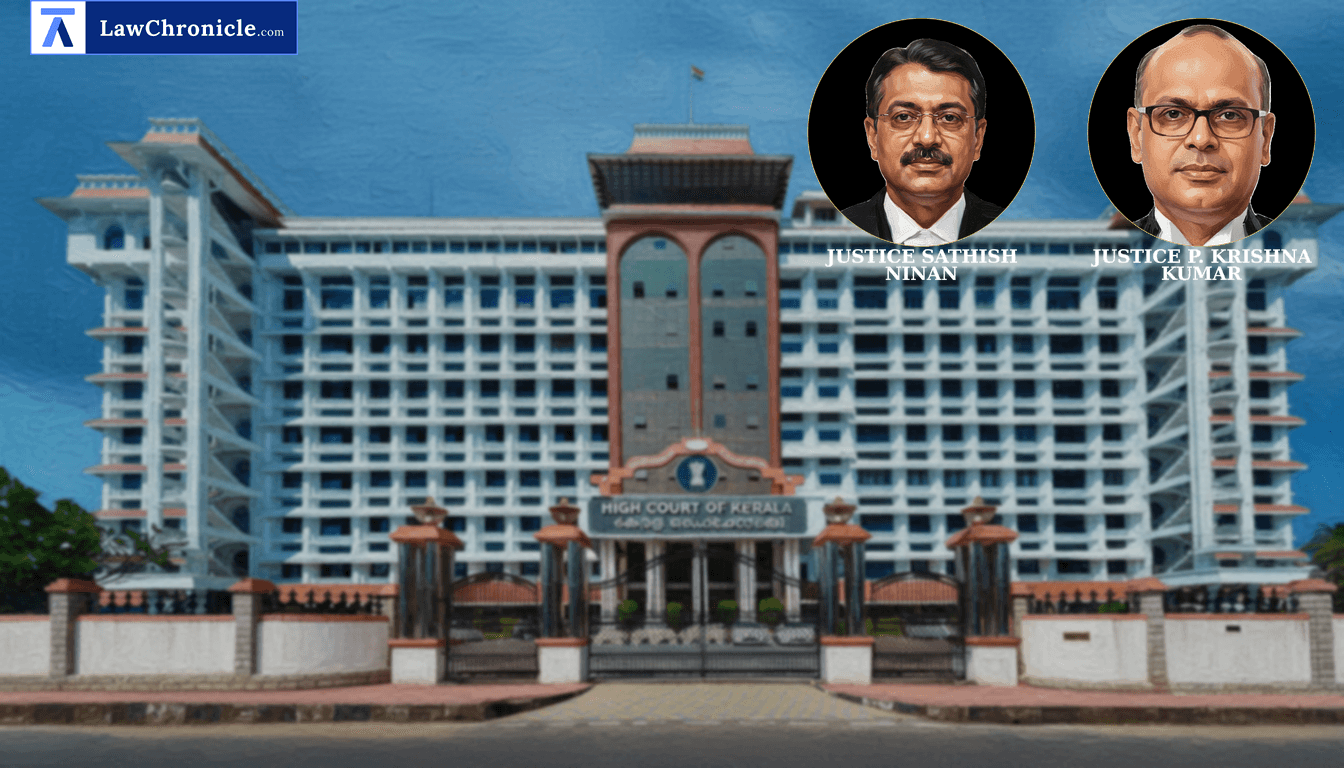
The Kerala High Court clarified that the "willingness" required for specific performance must be absolute and cannot be contingent upon conditions not stipulated in the original agreement.
A bench comprising Justice Sathish Ninan and Justice P. Krishna Kumar adjudicated upon appeals filed by both the plaintiff and the defendant against a trial court judgment that denied specific performance but ordered the return of the advance sale consideration. The Court scrutinized whether time was of the essence and if the plaintiff had demonstrated the mandatory readiness and willingness required under the Specific Relief Act, 1963.
Determining Time as the Essence of Contract
While time is generally not considered the essence in contracts involving immovable property, the Court observed that specific circumstances in this case pointed otherwise. The agreement, Ext.A3, involving approximately 34.98 acres, had a short initial period of three months, specific clauses for limited extensions, and explicit recitals stating time was a 'main component'.
Referring to Saradamani Kandappan v. S. Rajalakshi, the Court noted that the traditional rule regarding time being non-essential for immovable properties requires relaxation in the context of urban land where prices rise sharply due to inflation. Consequently, the High Court concurred with the trial court that the parties intended time to be the essence of the contract.
Readiness vs. Willingness: The Legal Distinction
Court's Rationale on Conditional Willingness
While the Court found the plaintiff had 'readiness' (financial capacity) evidenced by bank statements and previous payments of ₹ 5 crores, it held that the plaintiff lacked 'willingness'. This was because the plaintiff demanded a clearance certificate regarding ceiling limits under the Kerala Land Reforms Act, 1963 a condition not present in the original agreement.
The Court, in its reasoning, observed: "the willingness of the plaintiff was not absolute, but was qualified and subject to the defendant fulfilling a condition which was not stipulated in Ext.A3 agreement. Therefore, the willingness of the plaintiff to perform Ext.A3 agreement is found in the negative. Having held against the willingness of the plaintiff, the plaintiff is not entitled for a decree for specific performance of Ext.A3 agreement."
Exercise of Discretion under Section 20 of Specific Relief Act
The Court further highlighted that directing the conveyance of land potentially in excess of ceiling limits would be inappropriate under Section 84(2) of the Kerala Land Reforms Act, 1963. Furthermore, the suit was filed nearly three years after the expiry of the agreement period. Citing Susheela (Died) v. T.M.Muhammedkunhi, Nanjappan v Ramaswamy and Ors, and Desh Raj and Ors v. Rohtash Singh ( "(AIR 2023 SC 163)": 2022 CaseBase(SC) 53), the Court emphasized that delay, coupled with the rise in property values, makes the grant of specific performance inequitable.
The Court has the following directions:
"The defendant is liable to pay interest at the rate of 12% per annum till date of suit, thereafter at the rate of 9% per annum pending the suit, and at the rate of 6% per annum from the date of decree. In addition to the decree for ₹ 5 Crores with interest as noted above, the plaintiff is also granted a decree for recovery of ₹ 1 crore, which will bear interest at the same rates (12% being not applicable as the payment is pending the suit), the interest to accrue thereon from 12.11.2015. As decreed by the trial court, the amount shall be a charge on the plaint schedule properties. ... on deposit of the decreetal amount, the plaintiff shall produce in Court the original title deeds relating to the property, to be released to the defendant."
Background:
The dispute arose from an agreement dated September 29, 2007, where the plaintiff agreed to purchase 34.98 acres for approximately ₹ 10.14 crores. Despite paying ₹ 5 crores as advance, the sale was not completed. The plaintiff alleged the defendant failed to provide a clearance certificate regarding land ceiling limits under Kerala Land Reforms Act, 1963. The defendant contended that the plaintiff lacked the funds and that time was the essence. The trial court refused specific performance, citing Specific Relief Act, 1963 and Limitation Act, 1963, but ordered the return of the advance. The High Court modified the interest rates and directed the return of title deeds to the defendant upon payment.
Case Details:
Case No.: RFA Nos.690 & 713 of 2012
NeutralCitation: 2026:KER:38698
Case Title: M/S.RHEA REALITY PVT. LTD. v. M/S.BINANI ZINC LTD
Appearances:
For the Petitioner(s): SMT.SUMATHY DANDAPANI (SR.), SRI.MILLU DANDAPANI
For the Respondent(s): SRI.VIJAY V. PAUL, SHRI.AJAY V.ANAND, SMT.SHILPA SOMAN, SHRI.ROJIT ZACHARIAH, SHRI.SAFAL P. SALIM, SMT.ANGELA ELSA JOHN, SRI.JOSEPH KODIANTHARA (SR.)
Source: 2026 CaseBase(KER) 311
Similar Articles



 Breaking News


