


State Cannot Delay Dues Indefinitely After Claim Verification: Patna HC
 Copy Link
 Share
 Save
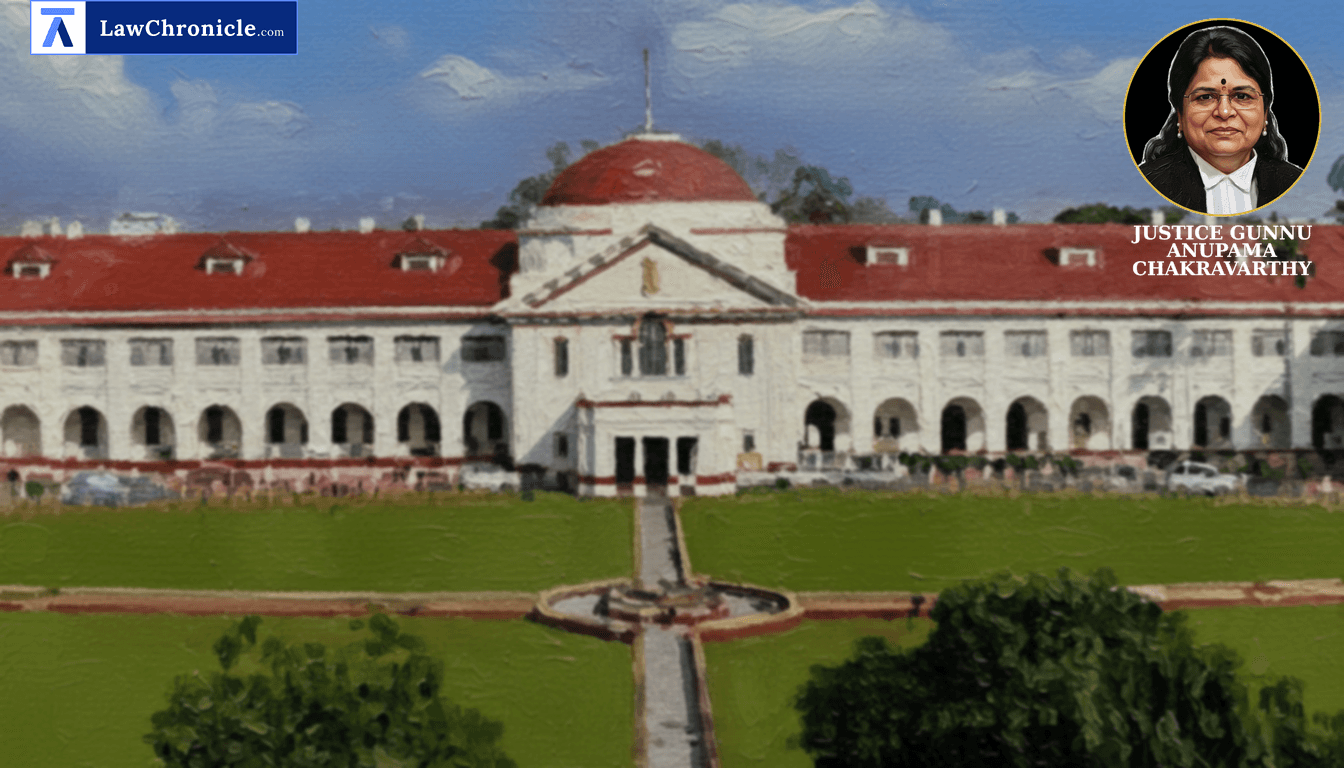
Holding that citizens cannot be made to suffer due to administrative delays once the government completes the verification of dues, the Patna High Court has ordered the State to release all admissible payments within two months. Justice G. Anupama Chakravarthy heard the civil writ petition challenging the state's prolonged failure to clear legitimate dues for educational training services rendered under government schemes.
Key Takeaways
- Curbs Executive Inaction: Mandates strict timelines for clearing verified public vendor dues.
- Limits Discretionary Delay: Prevents government departments from keeping payments pending indefinitely without legal cause.
- Enforces Administrative Accountability: Holds authorities accountable for non-payment despite finding service performance satisfactory.
The Patna Court observed that since the government had already conducted detailed inquiries and identified the admissible payments, keeping the matter pending was wholly unjustified.
The Patna High Court, in its reasoning, observed: "In view of the aforesaid stand taken by the respondents, this Court is of the considered opinion that once the respondent authorities have undertaken verification of the petitioner's claim and have themselves expressed their willingness to release the verified dues, there is no justification for keeping the matter pending indefinitely. The petitioner cannot be made to suffer on account of administrative delay after completion of the verification process."
The Court issued the following directions:
"Accordingly, the Writ Petition is allowed. The respondent authorities are directed to complete the verification, if any part thereof still remains, and release the admissible amount found payable to the petitioner, in accordance with law, within a period of two months from the date of receipt/production of a copy of this order."
Ratio
Once a public authority verifies and admits a financial claim for services rendered under a contract, withholding the release of admissible dues due to administrative inertia violates principles of fairness and cannot be sustained in law.
Background
The petitioner, a society registered under the Societies Registration Act, 1860, was selected as the lowest bidder to provide computer and vocational training in Dalit Boys' Schools in West Champaran district. Upon completing the work and undergoing multiple satisfactory inspections, the petitioner submitted bills totaling Rs. 4,80,000/- along with a request for the refund of security money deposited at the time of allotment.
When the state failed to release the payments despite repeated representations, the petitioner approached the High Court invoking Article 14 of the Constitution of India. In response, state officials submitted that a five-member inquiry committee was constituted to verify the attendance registers and records. The state submitted that Rs. 1,09,087/- and Rs. 96,461/- were found admissible and electronically transferred for computer training, while the vocational training claim was rejected for lack of documentary evidence.
Taking note of the state's verification process and partial disbursement, the Patna High Court allowed the writ petition, directing the authorities to complete any remaining verification and release all admissible payments within two months.
Case Details:
Case No.: Civil Writ Jurisdiction Case No.10242 of 2018
Case Title: Satyendra Kumar Patel v. The State Of Bihar & Ors.
Appearances:
For the Petitioner(s): Mr. Shambhu Sharan Singh, Advocate
For the Respondent(s): Smt. Kumari Amrita- GP 3
Source: 2026 CaseBase(PAT) 76
Similar Articles
 Breaking News


