


Trespassing Railway Tracks for Crossing Negates Claims of Untoward Incident: Delhi HC
 Copy Link
 Share
 Save
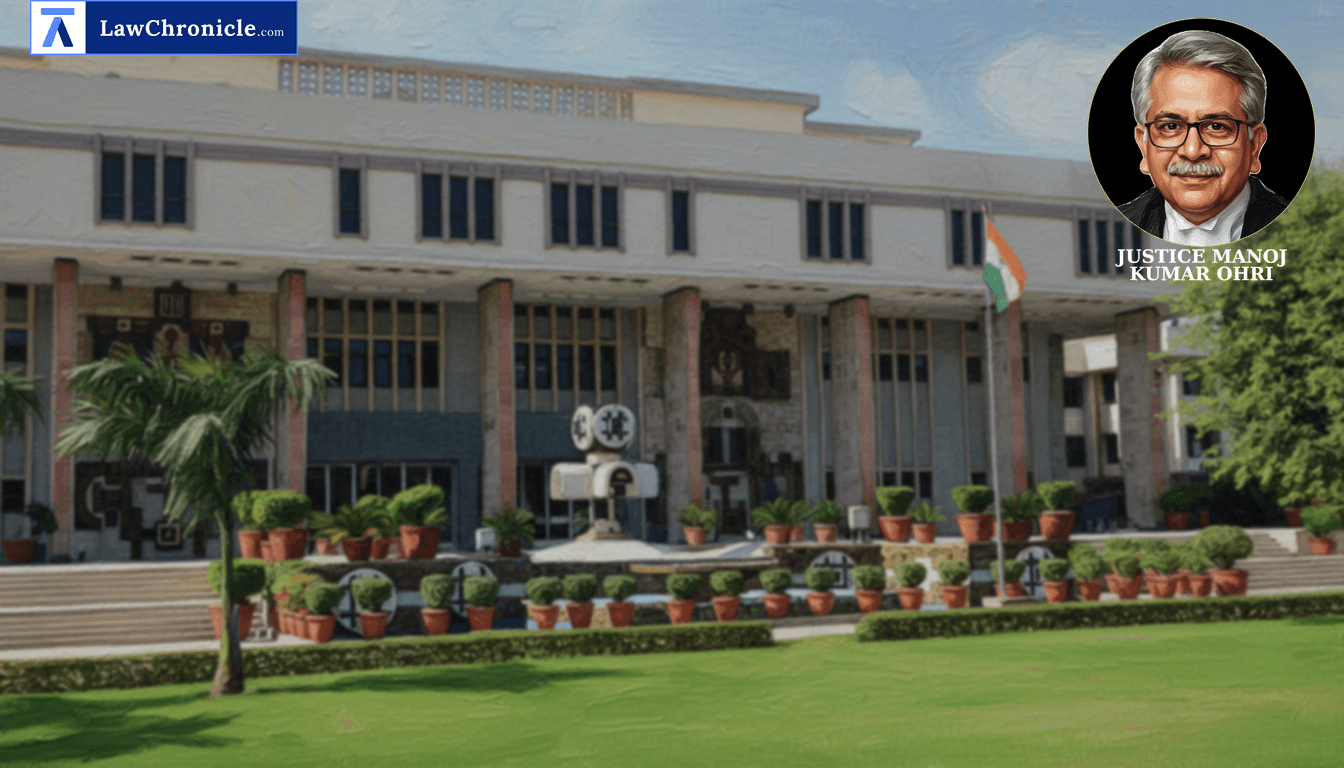
Attempting to cross railway tracks despite statutory warnings and gate closures constitutes a 'run-over' case rather than an 'untoward incident,' disentitling claimants from seeking compensation for the resulting fatalities. This ruling by the Delhi High Court reaffirms that while procedural leniency exists for lost tickets, it cannot override factual evidence of track trespassing that contradicts claims of accidental falls from running trains.
In a decisive ruling, Justice Manoj Kumar Ohri dismissed an appeal challenging the Railway Claims Tribunal's refusal to grant compensation, emphasizing that eye-witness accounts and official investigation reports outweighed the unsubstantiated claims of the appellants.
The Definition of Untoward Incident and Bona Fide Passengers
The appellants approached the Court following the dismissal of their claim by the Railway Claims Tribunal, which had found that the deceased was not a 'bona fide passenger' and the event did not constitute an 'untoward incident' as defined under the Railways Act, 1989. The appellants contended that the deceased fell from a running train near Lakadpur Railway Station due to overcrowding, and that his journey ticket was lost along with his bag.
While addressing the issue of the missing ticket, the Court noted the precedent set in Union of India v. Rina Devi ( "(2019) 3 SCC 572": 2018 CaseBase(SC) 1157), which clarifies that the mere absence of a ticket during recovery does not automatically disqualify a claimant. However, the Court shifted its focus to the veracity of the 'accidental fall' narrative.
Eye-Witness Testimony Refutes Claims of Accidental Fall
During the proceedings, the Court scrutinized the testimony of a railway gateman (RW-1) who witnessed the event. The gateman testified that the deceased attempted to cross the railway line while the gates were closed for the passage of the Tamil Nadu Express, ignoring verbal warnings and alarms. This testimony was further corroborated by the Divisional Railway Manager (DRM) report and the Railway Protection Force (RPF) inquiry.
Court's Rationale on Credibility of Evidence
The Court, in its reasoning, observed: "In the considered opinion of this Court, the appellants have failed to produce any reliable material to show that the deceased had actually boarded a train and had accidentally fallen therefrom. The oral testimony led on their behalf is not based on personal knowledge of the occurrence. In contrast, the version put forward by the respondent is duly supported by the testimony of RW-1 as well as the official railway record."
The Court further clarified that medical records such as the MLC and post-mortem report, while confirming a 'railway accident,' did not specifically substantiate the claim of a fall from a train. The Court has following directions:
"The appeal is, accordingly, dismissed."
Key Takeaways
Liability in Run-Over Cases
Injuries or deaths occurring while trespassing or crossing railway tracks do not qualify as 'untoward incidents' for compensation.
Primacy of Eye-Witness Evidence
Direct testimony from railway personnel (like gatemen) and statutory DRM reports hold significant evidentiary value over hearsay testimony from relatives.
Limitations of Precedent
While Union of India v. Rina Devi ( "(2019) 3 SCC 572": 2018 CaseBase(SC) 1157) protects passengers who lose tickets, it does not provide a shield for claimants when the fundamental nature of the accident is proven to be outside the scope of the Act.
Ratio
An incident where a person is struck while crossing railway tracks after disregarding statutory warnings and closed gates is a 'run-over' case and does not fall within the ambit of an 'untoward incident' under Section 123(c) of the Railways Act, 1989. Consequently, the railway administration is not liable for compensation in such instances.
Background:
The dispute originated from a claim application filed by the legal heirs of the deceased, Kamlesh Kumar, who died from injuries sustained on June 19, 2022. The claimants alleged that the deceased was a passenger traveling from Faridabad to Kanpur who fell from a running train. The Railway Claims Tribunal dismissed the claim, prompting the appeal to the High Court under Section 23 of the Railway Claims Tribunal Act, 1987. The High Court reviewed the conflicting narratives: the appellants' claim of an accidental fall versus the respondent's evidence of a track-crossing attempt at Gate No. 579-B. Upon finding that the official railway records and the gateman's testimony were consistent and credible, the Court upheld the Tribunal's decision and dismissed the appeal.
Case Details:
Case No.: FAO 191/2025
Case Title: Rubi Devi & Ors. V. Union Of India
Appearances:
For the Petitioner(s): Mr. Rajan Sood, Ms. Ashima Sood and Ms. Megha Sood, Advocates
For the Respondent(s): Mr. Ashish K. Dixit, CGSC with Mr. Umar Hashmi, Mr. Ayush and Ms. Iqra Sheikh, Advocates
Source: 2026 CaseBase(DEL) 3023
Similar Articles


 Breaking News


