


Unexplained Delay And Non-Disclosure Bar Return Of Goods: Delhi HC
 Copy Link
 Share
 Save
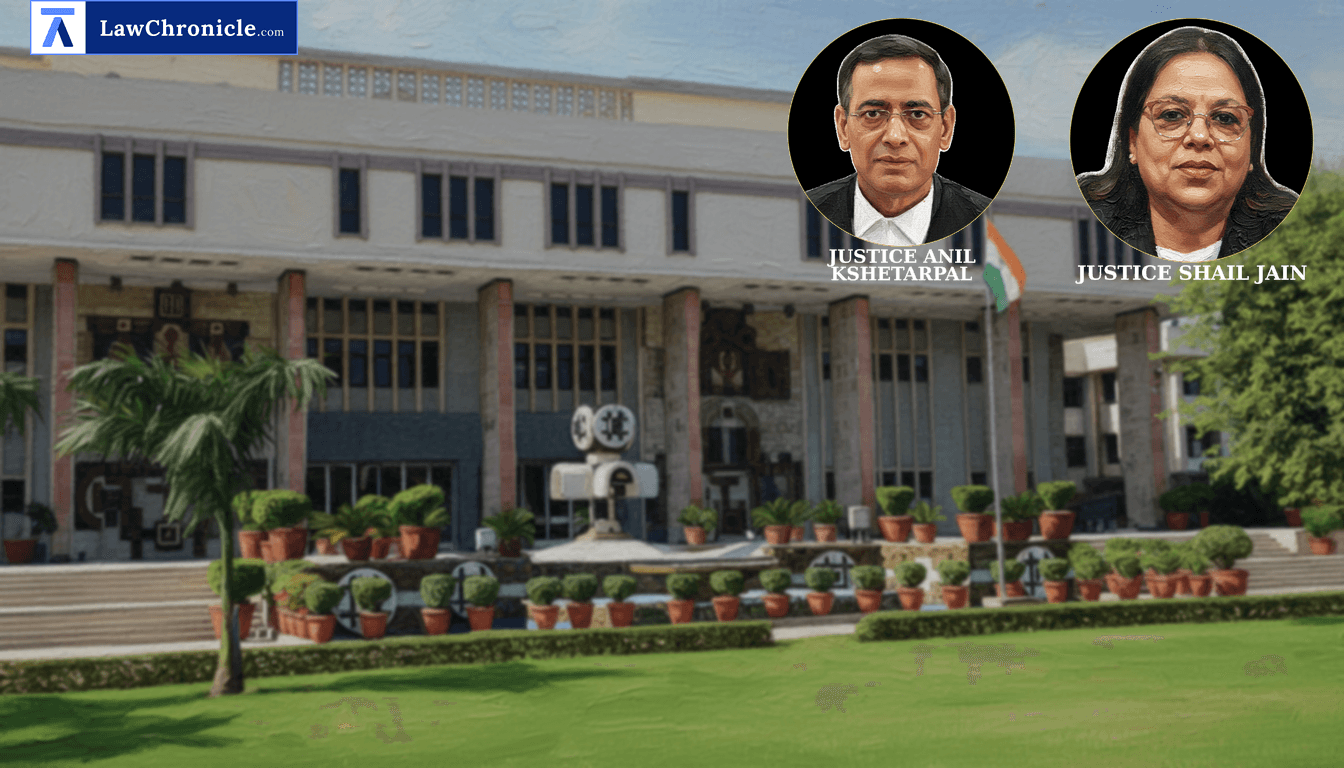
Suppressing material facts and approaching the court after an inordinate, unexplained delay disentitles a litigant from seeking extraordinary equitable relief under writ jurisdiction. The Delhi High Court refused to order the unconditional return of detained gold personal effects where the petitioner concealed her voluntary statement recorded under Section 108 of the Customs Act, 1962 and approached the court nearly two and a half years post-detention.
A division bench of Justice Anil Kshetarpal and Justice Shail Jain was considering a writ petition seeking setting aside of the detention of a yellow metal chain weighing 58 grams intercepted at Terminal-3 of Indira Gandhi International Airport, New Delhi, along with a direction for its unconditional release and waiver of warehouse charges.
Key Takeaways
- Equitable Jurisdiction Requires Clean Hands: Litigants seeking extraordinary relief under Article 226 of the Constitution of India must approach the court with complete disclosure and promptitude.
- Suppression of Section 108 Statement Fatal: Concealing contemporaneous voluntary admissions tendered under Section 108 of the Customs Act, 1962 disentitles petitioners from claiming unconditional release of detained items.
- Disputed Facts Bar Writ Remedies: Factual disputes regarding whether goods constitute used personal effects or baggage require statutory appraisement rather than summary adjudication in writ jurisdiction.
- Preservation of Statutory Process: Delay in challenging non-issuance of show cause notices does not automatically invalidate detention proceedings when factual inquiries remain pending.
Court Observations and Directions
Dismissing the plea for unconditional release, the High Court emphasized that writ jurisdiction cannot be exercised to bypass statutory appraisement mechanisms when material facts are suppressed. The Court, in its reasoning, observed: "Suffice it to observe that the Petitioner’s entitlement to an unconditional writ of release cannot be determined by suppressing or omitting this material contemporaneous record and by inviting the Court to proceed only upon the subsequent version set out in the Writ Petition."
The Court noted that precedent cases like Union of India & Ors. v. Jatin Ahuja and Saba Simran v. Union of India & Ors. cannot be applied mechanically without examining the specific factual matrix, particularly where a passenger has admitted to intentionally crossing the Green Channel without declaring goods. While declining unconditional release, the Court remitted the matter back to the authority to complete proceedings within a fixed timeline. The Court has following directions:
"The competent authority shall, therefore, take necessary steps for completion of the appraisement and such further proceedings as may be required in accordance with law, expeditiously and preferably within a period of three months from the date on which the Petitioner, through her authorised representative or otherwise in accordance with law, extends the requisite cooperation and makes herself available for completion of the proceedings."
Ratio
A petitioner who invokes the extraordinary equitable jurisdiction under Article 226 of the Constitution of India after substantial unexplained delay while suppressing contemporaneous statutory statements recorded during detention is not entitled to an unconditional writ for release of goods, and disputed questions regarding appraisement and baggage classification must be left to determination by competent statutory authorities.
Background
The petitioner arrived from the United Arab Emirates on June 28, 2023, and was intercepted after crossing the Green Channel at IGI Airport. Customs authorities recovered a yellow metal chain weighing 58 grams, issued a Detention Receipt citing a "Green Channel Violation," and recorded that the value was "to be appraised." On the same day, the petitioner gave a statement under Section 108 of the Customs Act, 1962 admitting that she intentionally failed to declare the chain, was aware of customs liability, agreed to the assessment, and stated she did not require a Show Cause Notice under Section 124 or a personal hearing.
After approximately 938 days, the petitioner instituted the writ petition claiming that the item was used personal jewellery protected under Article 300A of the Constitution of India and that failure to issue a Show Cause Notice under Section 110(2) of the Customs Act, 1962 mandated its return. The Department opposed the petition citing suppression of the Section 108 statement and gross delay.
Finding that the petition suffered from unexplained laches and involved disputed questions of fact, the High Court dismissed the writ petition while directing the department to complete appraisement within three months.
Case Details:
Case No.: W.P.(C) 1037/2026
Case Title: Nahid Zakiya Through Spa Mohammad Uzair V. Commissioner Of Customs
Appearances:
For the Petitioner(s): Ms. Richa Kumari, Mr. Pawan and Mr. Nagendra Yadav, Advs.
For the Respondent(s): Mr. Aakarsh Srivastava, SSC along with Mr. Ashish Bansal and Mr. Ankit Kumar, Advs.
Source: 2026 CaseBase(DEL) 5671
Similar Articles

 Breaking News


