Welfare State Cannot Discriminate Between Similarly Situated Employees: Rajasthan HC
 Copy Link
 Share
 Save
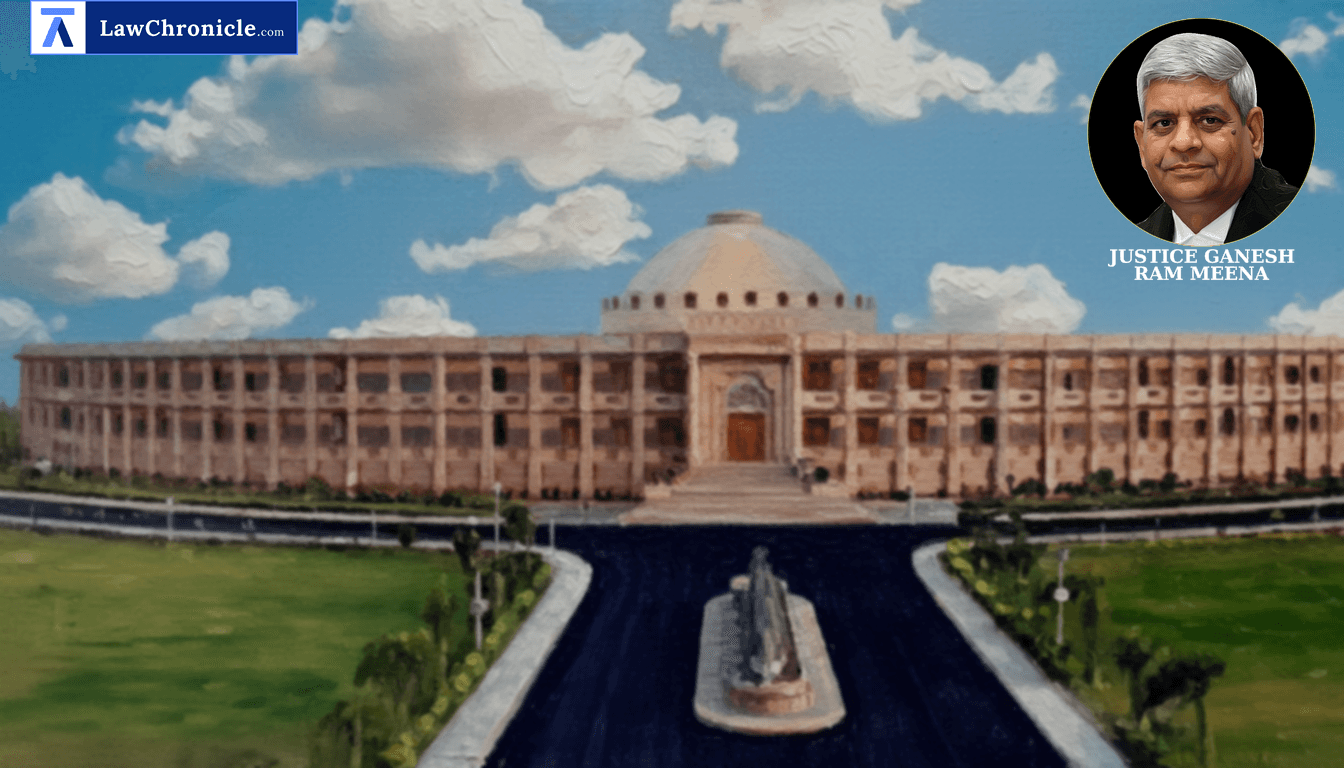
In a decisive crackdown on administrative opacity and 'ad-hocism', the Rajasthan High Court has ruled that a government undertaking acting as a 'constitutional employer' cannot deny regularization to long-term workers while extending the same benefits to similarly situated peers. The Court held that the extraction of perennial labour under temporary labels is a corrosive practice that violates the fundamental promise of equal protection under the law.
A Single Judge Bench of Justice Ganesh Ram Meena heard the writ petition filed by a work-charged helper who had dedicated over two decades of service to the state electricity department without being regularized. The Bench scrutinized the discriminatory conduct of the Rajasthan Rajya Vidyut Prasaran Nigam Ltd, which had implemented a Labour Court award for one employee but denied identical relief to the petitioner despite their cases being indistinguishable.
Key Takeaways
End of Discriminatory Regularization
State undertakings are prohibited from picking and choosing employees for regularization; if one similarly situated worker is regularized, the benefit must extend to all.
Perennial Nature of Work
Long-term engagement in roles that recur year after year must be reflected in sanctioned strengths rather than keeping workers under precarious temporary labels.
Constitutional Employer Obligations
Government entities are held to a higher standard than market participants and must organize work on lawful lines, ensuring fairness and transparency.
Retrospective Financial Relief
Employees denied regularization are entitled to full arrears, representing the difference between their actual pay and the minimum regular pay-scale from the date they became eligible.
Court's Rationale on Equality and Non-Discrimination
The Rajasthan High Court observed that the respondent company, being a government undertaking, is expected to function as a welfare state and cannot maintain a discriminatory stance. Relying on the principles laid down in Dharam Singh & Ors. vs. State of UP & Ors. and Jaggo vs. Union of India & Ors. ( "Civil Appeal No. ….. of 2024, SLP(C) No.5580/2024": 2024 CaseBase(SC) 715), the Bench emphasized that the state cannot balance its budgets on the backs of those performing basic public functions. The Bench observed that "The respondent company which is a Government undertaking, is expected to extend the same benefits to an employee which are being extended to the other similarly situated employee. The respondent company being a welfare State cannot make discrimination amongst the similarly situated employees... If an employee has worked for long, certainly his services are entitled for regularization, as the work which was being taken from the petitioner was of a perennial nature and not of temporary nature."
The Rajasthan High Court further noted that the State's duty to organize work on lawful lines is a constitutional discipline under Article 14, Article 16, and Article 21 of the Constitution of India. Therefore, the Bench directed the respondents to pass necessary orders on regularization of the petitione's services, held entitled to all consequential benefits and retiral benefits in accordance with law.
Ratio
When a government undertaking regularizes a 'similarly situated' employee based on a judicial award or policy, it is under a mandatory constitutional obligation to extend the same benefit to all other identically placed employees to avoid discrimination. The state, acting as a constitutional employer, is barred from practicing 'ad-hocism' or invoking financial stringency to override the rights of workers performing perennial duties.
Background
The petitioner was initially engaged on a muster roll basis in 1991 and later rejoined as a Helper-II in 2002, serving continuously until his superannuation in June 2026. Despite a 1988 order providing for regularization after two years of service, the respondents failed to act. Conversely, a colleague named Raghuveer Singh secured an award from the Industrial Tribunal for regularization effective from April 2004, which the department implemented.
The petitioner’s internal representations and a notice for demand of justice yielded no results, forcing him to approach the High Court. The respondents argued that the petitioner had an alternative remedy via the Labour Court and noted his retirement. However, the Rajasthan High Court rejected these technicalities, noting that since the department had already accepted the similarity between the petitioner and Raghuveer Singh in internal correspondence, the denial of benefits was arbitrary. The writ petition was allowed with full retrospective benefits.
Case Details:
Case No.: S.B. Civil Writ Petition No. 1110/2015
Neutral Citation: 2026:RJ-JD:55260
Case Title: Soraj Meena v. State of Rajasthan & Ors.
Appearances:
For the Petitioner(s): Mr. Manish Pitaliya, Mr. Kaushik Suthar, Mr. Shyam Charan
For the Respondent(s): Mr. Shiv Kumar Vyas, Mr. Hanuman Singh Gaur, Mr. Dharam Singh Jaggu
Source: 2026 CaseBase(RAJ) 31063
Similar Articles
 Breaking News