Supreme Court Directs Regularisation of Long‑Serving Daily‑Wage Income Tax Staff, Sets Aside High Court Order
 Copy Link
 Share
 Save
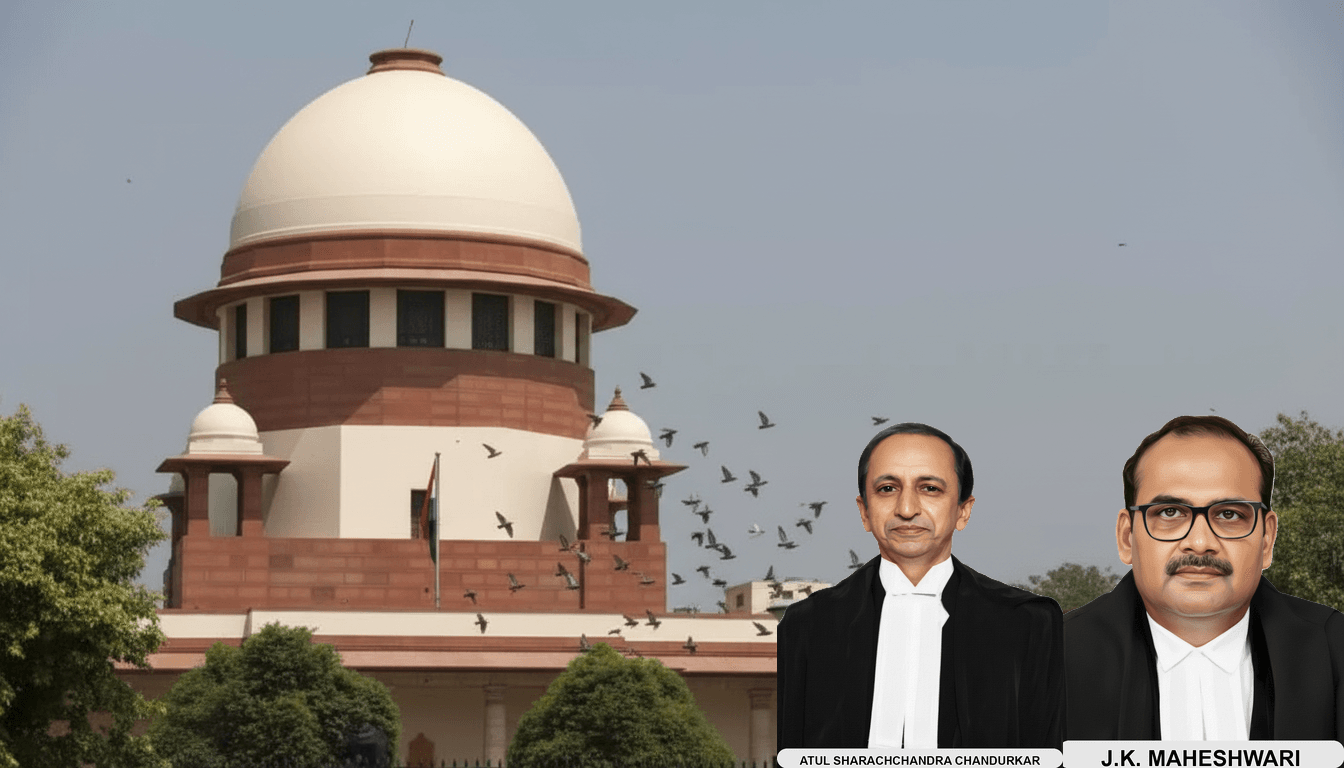
A bench of Justices J.K. Maheshwari and Atul S. Chandurkar heard an appeal by several daily‑wage workers of the Income Tax Office, Gwalior, challenging orders of the Central Administrative Tribunal, Jabalpur Bench and the Madhya Pradesh High Court which had declined to regularize their services. The appeals raised the question whether casual workers who had rendered continuous service and who were similarly situated to others already regularized could be denied regularization by relying on the Constitution Bench decision in Secretary, State of Karnataka v. Umadevi (3).
The Court allowed the civil appeal, set aside the High Court judgment dated 26.08.2019 and directed regularization of the appellants’ services from 01.07.2006 on the same terms as earlier orders in Ravi Verma & Ors. and Raman Kumar & Ors. The bench held that the appellants were similarly situated to other daily‑wage workers whose services had been regularized and that the Tribunal and the High Court erred in mechanically applying Uma Devi to deny relief. The Court, in its reasoning, observed: "The aforesaid observations are sufficient to hold that the Tribunal was not justified in denying relief to the appellants by relying upon the decision in Umadevi (3) and Ors. (supra). The High Court also erred in affirming the decision of the Tribunal. The appellants are entitled to similar reliefs as granted by this Court in Ravi Verma and Ors. (supra) as well as in Raman Kumar and Ors. (supra)." The judgment further relied on the law in Jaggo v. Union of India which held that where duties were "perennial and fundamental to the functioning of the offices" and appointments were not shown to be illegal, equitable regularization may be appropriate; the Court noted the distinction between "'irregular' and 'illegal' appointments" as central to that line of authority. The Court directed that benefits be released within three months and that the appeal be allowed with no order as to costs.
Background
The appellants — Pawan Kumar and others — had been engaged as daily‑wage/casual workers in the Income Tax Office, Gwalior, working as sweepers and a cook from the mid‑1990s. They were recruited after sponsorship through the Employment Exchange and alleged continuous service over many years. Following departmental decisions to outsource such work in 2011–2012, the appellants sought regularization and made representations to the Income Tax Department; relief was refused and they approached the Tribunal by Original Application No.719 of 2012. The Tribunal held that the appellants did not meet the requirement of having rendered continuous service for ten years or more as on 10.04.2006 under the Umadevi (3) judgment and declined regularization. The High Court, on writ petition, affirmed that view on 26.08.2019.
The appellants relied on this Court’s subsequent decisions in Ravi Verma & Ors. (judgment dated 13.03.2018) and Raman Kumar & Ors. (order dated 03.07.2023), where similarly placed daily‑wage Income Tax employees were held entitled to regularization to cure discriminatory treatment. The appellants pointed out that their names featured in lists of daily‑wage workers in the Gwalior office as on 31.10.2005 and thereafter, the same lists that included those earlier regularized. The Income Tax Department defended the denial on the ground that no sanctioned posts existed and that the engagements were merely casual; it relied on Uma Devi to contend that regularization could not be ordered.
The Supreme Court examined the relevant lists, compared the factual matrix with earlier decisions and accepted that the appellants were similarly situated to those already regularized. Relying on precedents that distinguished between illegal and irregular appointments and emphasised avoidance of discriminatory treatment, the Court held that the Tribunal and the High Court erred. The Court directed regularization from 01.07.2006 with consequential benefits to be paid within three months; applicants impleaded later were also held entitled to the same relief. The civil appeal was allowed and pending applications were disposed of.
Case Details:
Case No.: 2026 INSC 156 (Civil Appeal @ SLP (C) No.29214 of 2019)
Case Title: Pawan Kumar & Ors. v. Union of India & Ors.
Appearances:
For the Petitioner(s): Counsel not indicated in the reported judgment
For the Respondent(s): Counsel not indicated in the reported judgment
Source: 2026 CaseBase(SC) 128
Similar Articles
 Breaking News