


Appointment Violating Statutory Procedure Held Void Ab Initio; No Claim to Supernumerary Status or Pension
 Copy Link
 Share
 Save
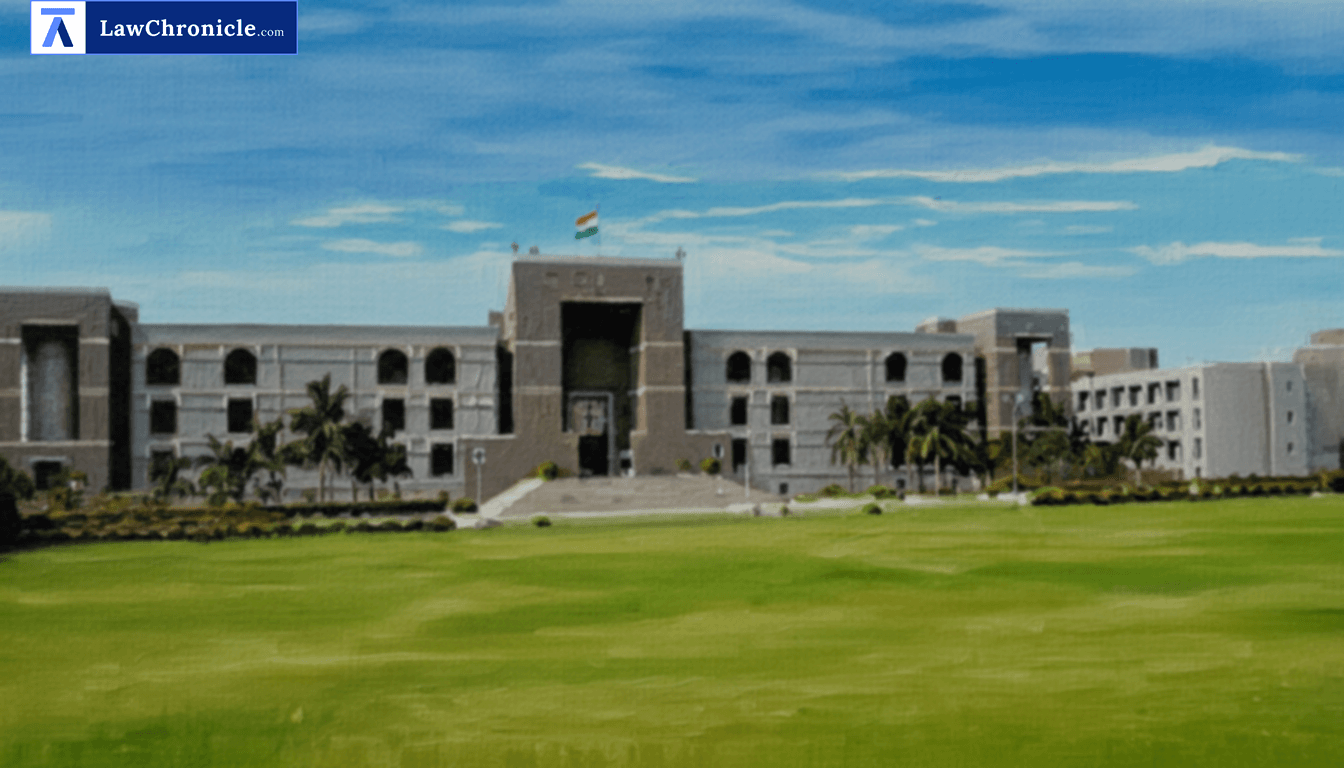
A single-judge bench of Justice Maulik J. Shelat heard a writ petition challenging the District Education Officer’s order dated 10.12.2013 that rejected the petitioner’s claim to be treated as a supernumerary teacher and to receive retiral benefits, including pension. The petition arose from earlier litigation in which the petitioner’s termination was quashed but his initial appointment was questioned under Section 35 of the Gujarat Secondary Education Act, 1972.
The High Court held that the petitioner’s appointment contravened Section 35 and was therefore illegal and void ab initio, and that he was not entitled to be treated as a supernumerary teacher or to receive pensionary benefits. The Court rejected the submission that prior directions by a coordinate Bench amounted to recognition of the appointment or an entitlement to state-funded retiral benefits. The Court, in its reasoning, observed: “Sub clause (7) of Section 35 of the Act, 1972 clearly states that any appointment of a teacher made in contravention of the provisions of this Section shall be ineffective. It is trite that any appointment of a teacher made in contravention of the said provisions is void ab initio and, in such circumstances, it cannot be regularized.” The judge also noted earlier authority that “Appoint ments made in violation of the mandatory provisions of a statute would be illegal and, thus, void. Illegality cannot be ratified. Illegality cannot be regularised, only an irregularity can be.”
Background The petitioner had been appointed and placed in charge as Headmaster of a secondary school in June 1987 and was terminated in June 1990. He challenged the termination before the Gujarat Secondary Education Tribunal, which upheld the school’s action. The petitioner then secured partial relief in Special Civil Application No. 3285 of 1991, when a coordinate Bench in 2000 set aside the termination for breach of natural justice and directed the management to pay arrears up to the closure of the institution in 1995. That earlier judgment observed, inter alia: “The respondent-management is directed to pay all the aforesaid benefits to the petitioner up to the date of closure of the institution and whatever benefit is given to other teachers who were continuing in the school up to the closure of the institution should also be given to the petitioner. If the D.E.O. has considered other such teachers as supernumerary teachers and if such benefit is given, the said benefit also should be given to the petitioner.”
Relying on that direction, the petitioner repeatedly sought consideration from the District Education Officer (DEO) and obtained interim orders from this Court directing the DEO to decide his representation. On 10.12.2013 the DEO rejected the claim on the ground that the original appointment did not comply with Section 35 of the Act, 1972 and was therefore illegal. The petitioner contended that, because other teachers from the same school had been treated as supernumerary and given benefits, parity should be extended to him. The State respondents contended that appointments made contrary to mandatory statutory procedure were void ab initio and could not give rise to a claim for state-funded salary or pension; the 2000 order had not held the appointment valid or directed the State to pay pension.
The Court examined the earlier coordinate Bench order and relevant Supreme Court precedents, including K. Brahmanandam and Sulekh Chandra Pradhan, reiterating that appointments made in violation of mandatory statutory provisions could not be regularised. The Court found no material to show that any similarly illegally appointed teachers were treated as supernumerary; where regular appointees were treated as supernumerary that did not entitle the petitioner to parity. The Court also observed that the petitioner’s total qualifying service was insufficient to claim pension even if the appointment were regular. The writ petition was dismissed and the Rule was discharged, with no order as to costs. No direction to pay retiral dues was issued.
Case No.: C/SCA/960/2014 Case Title: HIRABHAI M MAKWANA Versus STATE OF GUJARAT & ORS. Appearances: For the Petitioner(s): Mr. Dipak R. Dave, Advocate For the Respondent(s): Mr. Siddharth Rami, Assistant Government Pleader (for Respondent Nos.1 & 2); HCLS Committee (for Respondent No.3); Ms. Bhavika H. Kotecha, Advocate (for Respondent No.3)
Similar Articles
 Breaking News


