


Long Service or Interim Orders Cannot Validate Illegal Appointments: Allahabad HC
 Copy Link
 Share
 Save
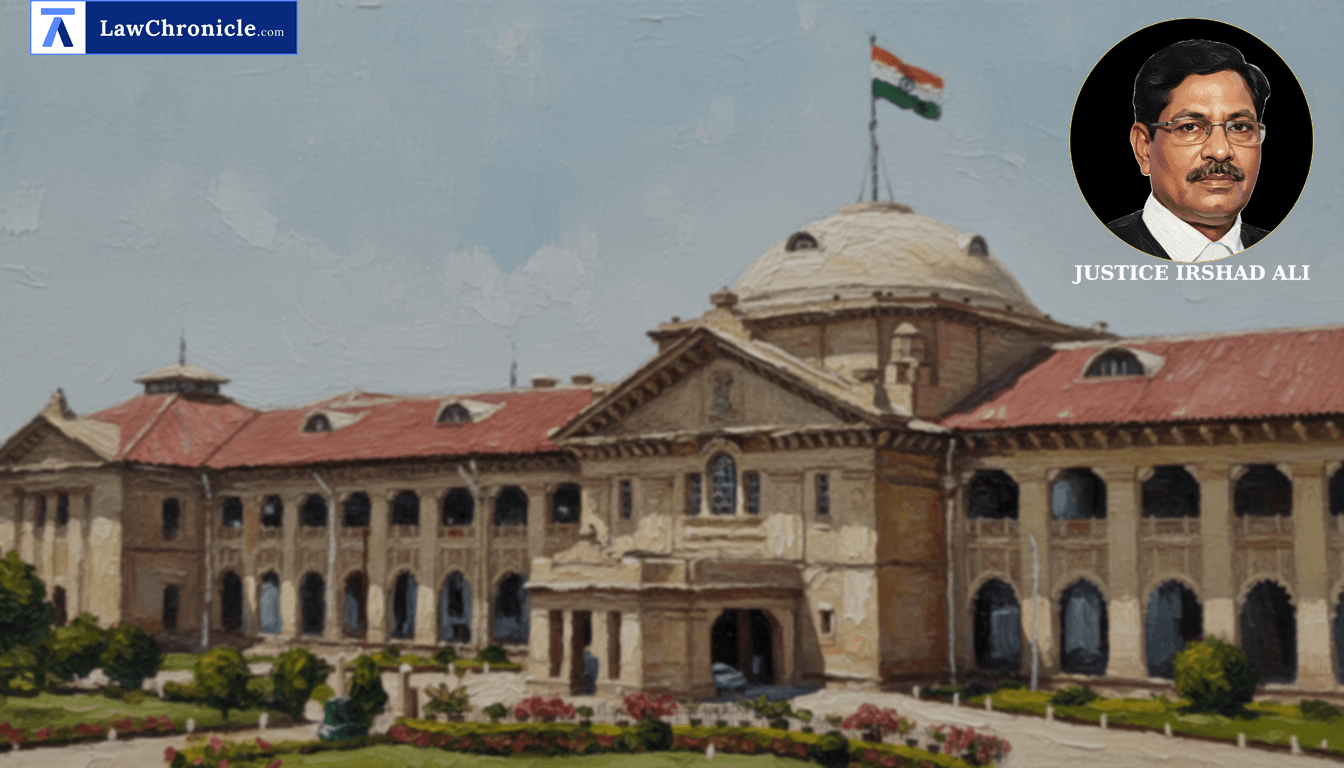
In a stern decision upholding public exchequer integrity, the High Court has ruled that performing duties for decades under interim judicial orders does not convert an unapproved or invalid appointment into a legally enforceable right to public salary. Clarifying the statutory mandate for aided educational institutions, the court held that long tenure and satisfactory work performance cannot override foundational illegalities or replace mandatory approval from competent statutory authorities.
A single judge bench of Justice Irshad Ali adjudicated a writ petition filed seeking directions for the release of regular monthly salaries and arrears under the U.P. High Schools and Intermediate Colleges (Payment of Salaries of Teachers and Other Employees) Act, 1971. The petitioners challenged administrative decisions withholding public funds, while the respondents raised objections regarding non-approval of the appointment by the University, missing appointment orders, lack of prescribed educational qualifications at the time of initial engagement, and an alleged conflict of interest involving the institution's former manager.
Key Takeaways
- No Estoppel by Interim Salary Payments: Salary disbursed under interim orders does not create a vested legal right if the underlying appointment lacks legal validity.
- Statutory Approval Mandatory: Continuous service or satisfactory institutional results cannot cure a foundational defect where a statutory authority explicitly rejected approval.
- Burden on Public Fund Claimants: Litigants demanding salary from the public exchequer under Article 226 of the Constitution of India must produce unimpeachable primary appointment documents.
- Precedent on Fraud and Void Appointments: Relying on R. Vishwanatha Pillai v. State of Kerala & Others, the court reaffirmed that void appointments confer no constitutional guarantees under Article 311 of the Constitution of India.
Judicial Rationale and Observations
The court scrutinized the primary appointment record, noting that the petitioner failed to place the initial appointment order on record and had sought to amend the date of appointment sixteen years after filing the petition. The court emphasized that payment of salary from public funds cannot be claimed merely on the basis of actual continuance or discharge of duties unless the appointment itself is shown to have been made in accordance with applicable statutory provisions.
The Court, in its reasoning, observed: "It is settled that payment of salary from public funds cannot be claimed merely on the basis of actual continuance or discharge of duties unless the appointment itself is shown to have been made in accordance with the applicable statutory provisions and by following the prescribed procedure."
Highlighting the limitation of relying on long service, the Court further noted: "The doctrine of long continuance cannot be invoked to compel the State to make payment from public funds where the foundational legality of the appointment remains unestablished. The Court cannot ignore statutory requirements merely because the petitioner has continued in service for a considerable period."
The Court has following directions:
"The interim order dated 08.02.2005 shall stand merged in the final order and shall not be treated as creating any independent or vested right in favour of the petitioners."
Ratio
An appointment made without following statutory procedure, lacking mandatory approval from the competent statutory authority, or failing essential eligibility requirements is void ab initio. Neither long continuance in service, satisfactory work performance, subsequent administrative correspondence, nor receipt of salary under interim court orders can cure such a foundational defect or create a legally enforceable right under Article 226 of the Constitution of India to claim salary from the public exchequer.
Background
The primary petitioner claimed to have been appointed as Principal of Shri Ganesh Sanskrit Pathshala, Gonda on July 8, 1992 (originally pleaded as July 8, 1989), while the co-petitioners were appointed as Assistant Teachers. Although Sampurnanand Sanskrit University issued various communications mentioning institutional functioning, official records revealed that on October 5, 1993, the University explicitly disapproved the appointment and directed the management to conduct a fresh selection process, which was never undertaken.
Furthermore, the respondents pointed out that at the time of the alleged 1989 appointment, the petitioner's father was serving as the Manager of the institution, and the petitioner had not completed the required higher qualification. The court observed that subsequent dismissals of competing claims by rival teachers did not automatically validate the petitioner's own appointment. Consequently, finding that the petitioners failed to establish an unimpeachable legal right, the High Court dismissed the writ petition.
Case Details:
Case No.: Writ - A No. - 916 of 2005
Neutral Citation: 2026:AHC-LKO:56545
Case Title: Ved Pati Tripathi and 2 Ors v. State of U.P. Thru Secretary Secondary Education and 4 Ors
Appearances:
For the Petitioner(s): G P Mishra, Abhishek Kumar Pandey, Girish Chandra Verma, Pawan Kr. Trivedi, Pawan Kumar Trivedi, Pradeep Kumar Tripathi, Ravindra Kumar Mishra, Shashank Verma
For the Respondent(s): C S C, Abhishek Tiwari, Anand Dubey, Anupam Dwivedi, Dinesh Kumar Shukla, Jyotinjay Verma
Source: 2026 CaseBase(ALL) 614
Similar Articles
 Breaking News


