


Contractual Disputes in Construction Fall Outside Writ Jurisdiction: Gauhati HC
 Copy Link
 Share
 Save
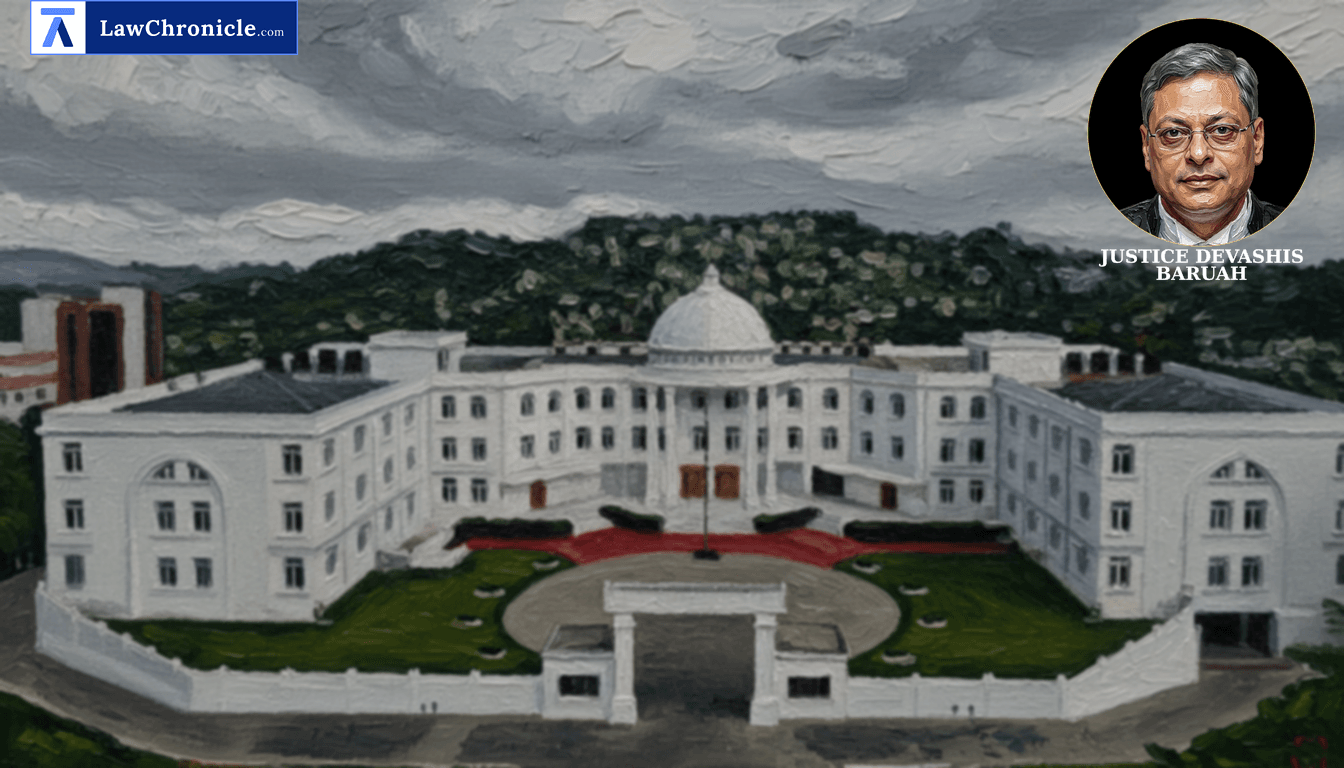
The Gauhati High Court has ruled that contractual disputes in construction over the distribution of project payments must be resolved through civil courts or arbitration. In a decisive stance against the misuse of Constitution of India, the Bench directed that disputed funds be deposited into a joint account rather than being paid directly to a single contesting party.
Justice Devashis Baruah, presiding over the matter, heard the petition involving a dispute between a Joint Venture (JV) and its partner regarding the entitlement to proceeds from a completed road construction project. The Bench emphasized that the High Court cannot act as an adjudicatory body for private contractual disagreements when specific mechanisms like arbitration or civil suits are available.
Key Takeaways
Bar on Writ Jurisdiction
Inter-party disputes arising out of private Memorandums of Understanding (MoU) cannot be entertained under the extraordinary writ jurisdiction when alternative remedies exist.
Sanctity of Joint Accounts
Agreed-upon financial arrangements, such as depositing payments into a specific Joint Project Account, must be honored by state authorities to prevent prejudice to either party during a dispute.
Recourse to Alternative Dispute Resolution
Parties embroiled in commercial payment disputes are redirected to civil courts or arbitration, reinforcing the procedural boundaries of the PWD and other state departments.
Court Observations on Contractual Remedies
The Gauhati High Court scrutinized the Memorandum of Understanding dated January 11, 2021, which governed the relationship between the Petitioner and Respondent No. 6. The Bench noted that while the project for the North Lakhimpur By-pass was completed, the conflict centered on who should receive the final payments.
The Bench opined that "such disputes are purely disputes between the Petitioner and the Respondent No.6 should be adjudicated only before a competent Court of Civil Jurisdiction or Arbitration if there exists an Arbitration Clause. Under such circumstances, the public law remedy under Constitution of India of the Constitution cannot be involved."
Directions Issued to Public Works Department
To ensure a neutral resolution, the Gauhati High Court has following directions:
"(i) The Chief Engineer, PWD (NH Works) who is the Respondent No.2 is directed to disburse the entire amount payable to the Joint Project Account bearing Account No. 0307050013961 maintained in Punjab National Bank, North Lakhimpur Branch. The same should be done not later than 4 (four) months from the date a certified copy of this judgment is served upon the Chief Engineer PWD (NH Works) i.e. the Respondent No.2.
(ii) Upon deposit of the said amount, the Petitioner as well as the Respondent No.6 would be at liberty to amicably resolve the dispute and if such dispute is not resolved, the Petitioner as well as the Respondent No.6 shall be at liberty to get their disputes resolved before a competent Court of Civil Jurisdiction and if there exists an Arbitration Clause, then through Arbitration.
(iii) Interim order passed earlier stands vacated."
Ratio
Disputes arising from the internal arrangements of a joint venture regarding the distribution of contract proceeds are private in nature. Such disputes do not invoke a public law element and therefore cannot be adjudicated under Article 226 of the Constitution of India. The proper forum for such grievances is a competent Civil Court or an Arbitral Tribunal as per the terms of the agreement.
Background
The case originated from a contract awarded to the Petitioner, M/S DRA KTEE (JV), for the construction of the North Lakhimpur By-pass. A Memorandum of Understanding (MoU) was signed between the Petitioner and Respondent No. 6 (M/S Khushi Constructions) on January 11, 2021, to execute the work. Clause 5 of this MoU specifically mandated that all payments related to Bills/IPCs/SPSs be released into a designated Joint Project Account at Punjab National Bank.
Following the completion of the work, a dispute arose regarding the proceeds, leading to an order dated December 31, 2025, by the Chief Engineer, PWD (NH Works), which suggested the amount was payable to Respondent No. 6. The Petitioner challenged this order, asserting their rights over the funds. The Gauhati High Court, while declining to settle the factual merits of the dispute, upheld the procedural necessity of depositing the funds into the joint account as per the MoU, while vacating previous interim orders and granting parties the liberty to seek civil or arbitral remedies.
Case Details:
Case No.: WP(C)/905/2026
Neutral Citation: 2026:GAU-AS:14445
Case Title: M/S DRA KTEE (JV) VERSUS THE STATE OF ASSAM AND OTHRS
Appearances:
For the Petitioner(s): Mr. B. Pathak, Advocate
For the Respondent(s): Mr. P. Nayak, Addl. AG, Assam; Mr. A. Chakraborty, Advocate
Source: 2026 CaseBase(GAU) 1455
Similar Articles

 Breaking News


