


Delhi HC Grants Bail to 2020 Riots Accused Citing Parity with Co-Accused
 Copy Link
 Share
 Save
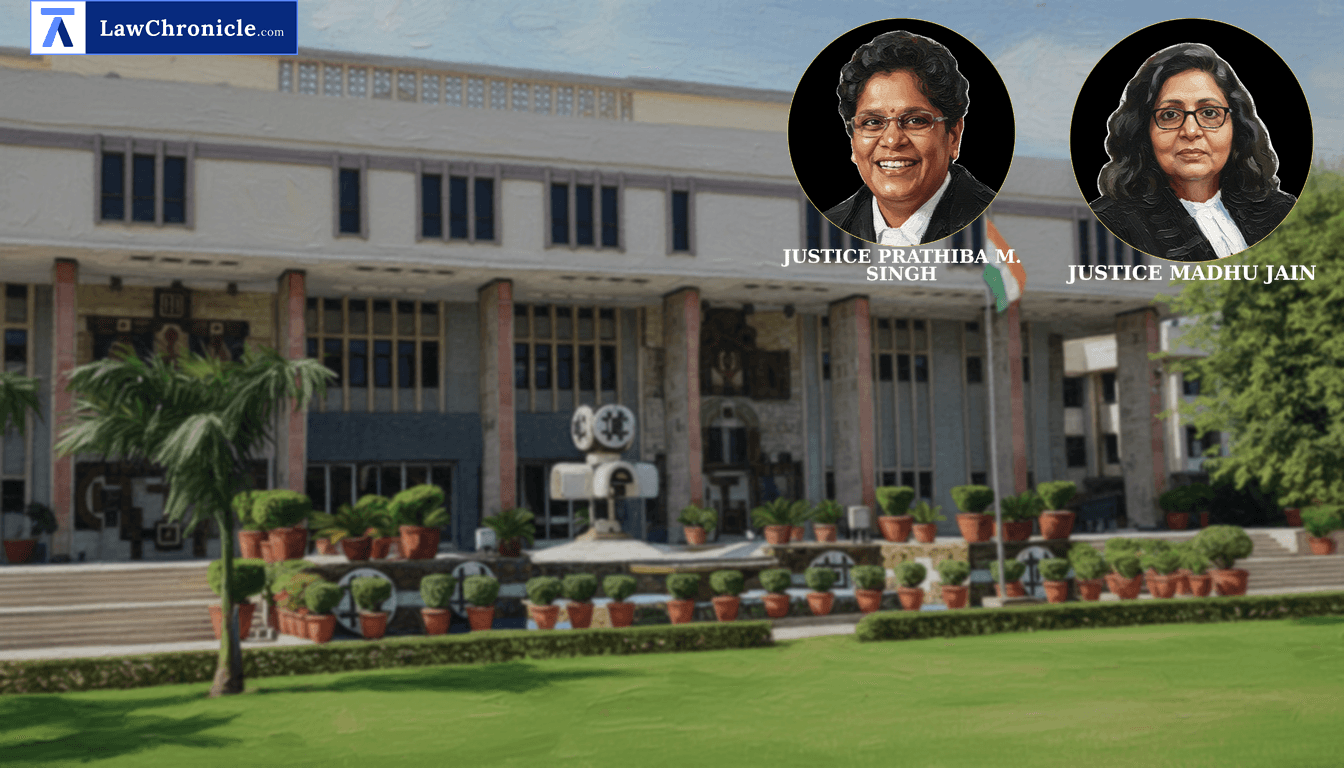
The Delhi High Court has granted regular bail to an accused in the 2020 North East Delhi riots case, observing that his role was comparable to others already released by the Supreme Court.
A division bench comprising Justice Prathiba M. Singh and Justice Madhu Jain heard the appeal filed under Section 21(4) of the National Investigation Act, 2008. The Appellant challenged an order passed by the Additional Sessions Judge, Shahdara District, which had previously rejected his plea for regular bail in connection with FIR No. 59/2020.
Parity with 'Local Facilitators' and 'Field Operators'
The Appellant contended that his case was fully covered by the recent Supreme Court ruling in Gulfisha Fatima v. State (Govt. of NCT of Delhi) ( "2026 INSC 2": 2026 CaseBase(SC) 1). He argued that the roles attributed to him participation in meetings and presence at protest sites were identical to those of Mohd. Saleem Khan and Shadab Ahmad, who were granted bail by the apex court.
While the State, represented by the Additional Solicitor General, opposed the bail citing the Appellant’s active role in the conspiracy and the stringent requirements under Section 43D(5) of the Unlawful Activities (Prevention) Act, 1967, the Court found the Appellant’s role to be operational rather than directive. The Court noted that the Supreme Court in Gulfisha Fatima v. State (Govt. of NCT of Delhi) ( "2026 INSC 2": 2026 CaseBase(SC) 1) had distinguished between 'ideological drivers' like Umar Khalid and 'local-level facilitators' who acted as field operators.
Court's Rationale on Continued Incarceration
The Court observed that the Appellant had been in custody for over five years and ten months. With the trial still at the stage of arguments on charge, the Bench noted that the proceedings would likely take a considerable amount of time.
The Court, in its reasoning, observed: "After having considered the role of the Appellant, this Court is of the view that the same is similar to the role which is attributed to Mohd. Saleem Khan and Shadab Ahmad who had also participated in the meetings, protest and chakka jams. There is no major distinction between the role of the Appellant and the role of Mohd. Saleem Khan and Shadab Ahmad."
Conditions for Release
To balance the interests of justice with the right to personal liberty, the Court imposed stringent conditions for the Appellant's release. The Court has the following directions:
"i. The Appellant shall execute a personal bond for the sum of ₹2,00,000/- (Rupees Two Lakhs only) with two local sureties of the like sum to the satisfaction of the Trial Court.
ii. The Appellant shall remain within the National Capital Territory of Delhi and shall not leave its territorial limits without prior permission of the Trial Court. Any request for travel shall disclose reasons and such prayer/request shall be considered by the Trial Court strictly on its merits
iii. The Appellant shall surrender his passport, if any, before the Trial Court. Where no passport exists, an affidavit to that effect shall be filed. We direct the Respondent to intimate all the Immigration Authorities in the country not to permit their exit from the country in any manner whatsoever, without express permission from the Trial Court.
iv. The Appellant shall furnish his current residential addresses, contact numbers, and e-mail addresses to the Investigating Officer as well as to the Trial Court. The Appellant shall not change his place of residence or contact particulars without giving at least seven days’ prior written intimation to the Investigating Officer and the Trial Court.
v. The Appellant shall personally appear twice a week, that is on Monday and Thursday between 10:00 a.m. and 12:00 noon, before the Station House Officer, Police Station Crime Branch, Delhi Police, Office of the Commissioner of Police, Police Headquarters, Jai Singh Marg, New Delhi – 110001 and mark his attendance. The Station House Officer shall maintain a separate register of attendance in respect of Appellant and shall furnish a monthly compliance report to the Trial Court, which shall be placed on the main record of the case.
vi. The Appellant shall not directly or indirectly contact, influence, intimidate or attempt to contact any witness or any person connected with the proceedings, nor shall it associate with or participate in the activities of any group or organization linked to the subject matter of the present FIR/ final report.
vii. The Appellant shall not make or publish or disseminate any information, statement, article or post whether in print, electronic or social media concerning the present case or its participants till conclusion of the trial.
viii. The Appellant shall not participate in any programme or address or attend any gathering, rally or meeting, whether physically or virtually till conclusion of the trial.
ix. The Appellant shall not circulate any post either in electronic form or physical form or circulate any hand bills, posters, banners, etc in any form whatsoever.
x. The Appellant shall fully cooperate with the trial and shall appear on every date of hearing unless exempted for reasons to be recorded by the Trial Court to its satisfaction and it shall not exhibit any conduct that has the effect of delaying the proceedings.
xi. The Appellant shall maintain peace and good behaviour throughout and in the event of any offence committed during the pendency of the trial, the prosecution would be at liberty to seek for revocation of the bail granted by filing such application before the Trial Court and in the event of such application being filed the Trial Court shall consider it on its own merits.
xii. In case of breach of any of the afore-stated conditions imposed or in the event of Appellant having misused the liberty granted, it shall be open to the Trial Court to cancel the bail after affording opportunity of hearing to the Appellant."
Background:
The case stems from FIR No. 59/2020 related to the communal riots in North East Delhi in February 2020. Initially registered under various sections of the Indian Penal Code, 1860, the chargesheet later included provisions of the Unlawful Activities (Prevention) Act, 1967, the Arms Act, 1959, and the Prevention of Damage to Public Property Act, 1984. The prosecution alleged that the Appellant participated in secret meetings in February 2020 to conspire for the protests and was involved in inciting clashes by carrying weapons and making inflammatory speeches. However, the High Court found that since co-accused with similar roles had been granted bail, the Appellant was entitled to parity, leading to the disposal of the appeal and the grant of bail.
Case Details:
Case No.: CRL.A. 135/2026
Case Title: SALIM MALIK MUNNA v. STATE THROUGH SHO PS SPECIAL CELL
Appearances:
For the Petitioner(s): Mr. Jawahar Raja, Mr. Archit Krishna, Ms. Tamanna Pankaj, Ms Priya Vats, Ms. Aditi Saraswat, Mr. Anirudh Ramnathan, Mr. Nitai Hinduja, Mr. Indronil Choudhary, Mr. Ashutosh Shukla, Advs.
For the Respondent(s): Mr. S.V. Raju, ASG along with Mr. Madhukar Pandey- SPP, Mr. Dhruv Pande, Mr. Samrat Goswami, Insp. Anil Kumar - Special Cell, Insp. Sandeep Kumar with SI Divya, Ms. Sakshi Jayant, Adv. for R2
Source: 2026 CaseBase(DEL) 352
Similar Articles
 Breaking News


