Gujarat High Court Quashes 'Veg Zone' Ban on Non-Vegetarian Food Near Somnath
 Copy Link
 Share
 Save
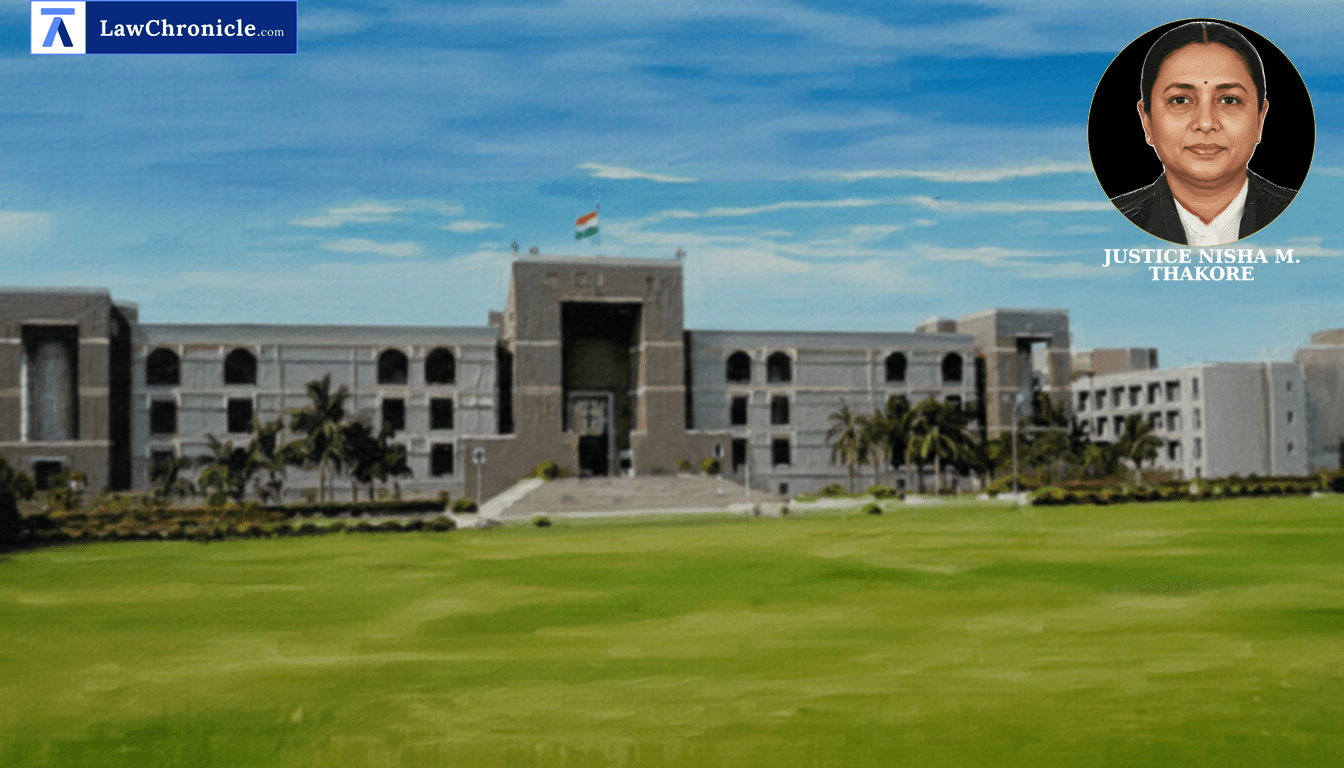
In a robust defense of constitutional freedoms, the Gujarat High Court has struck down an executive notification prohibiting the sale and storage of non-vegetarian food on public routes leading to the Somnath Temple, ruling that the State cannot use 'public order' as a facade to extinguish legitimate trade based solely on religious sentiments.
A Single Judge bench of Justice Nisha M. Thakore adjudicated the challenge against the District Magistrate’s notification, which had expanded a decade-old prohibition into a permanent ban across several key routes. The Court emphasized that while the State possesses the power to regulate business, it lacks the statutory authority under the Gujarat Police Act, 1951 to impose absolute dietary restrictions or dictate food preferences within private eating houses.
Key Takeaways
Limits on Executive Power
Administrative authorities cannot impose a total and permanent ban on a lawful trade under the guise of general police regulations or local law and order powers.
Supremacy of Fundamental Rights
Religious sentiments of one section of society cannot be used to override the fundamental right of another section to carry on a legitimate business under Article 19(1)(g) of the Constitution of India, 1950.
Regulation vs. Extinguishment
The power to 'regulate' implies the continued existence of an activity; an authority exceeding this to impose an absolute ban acts ultra vires the parent statute.
Judicial Test of Proportionality
Any restriction on trade must satisfy the four-pronged test: legitimate goal, rational connection, necessity (least restrictive measure), and balancing of rights.
The Doctrine of Proportionality and Dietary Freedom
The Court analyzed the impugned notification through the lens of the Constitution of India, 1950, specifically Article 19(1)(g) and the reasonable restrictions permitted under Article 19(6). It was noted that the petitioners, who had been running their restaurants for nearly 40 years, held valid licenses under the Food Safety and Standards Act, 2006. The Court observed that while maintaining the sanctity of religious sites is a legitimate concern, the State failed to demonstrate why a total prohibition was the only remedial measure available.
The Court, in its reasoning, observed: "The sole reason assigned by the Learned Magistrate to impose ban is the religious sentiments of sections of society who are against the visual display of non vegetarian food on street however, such display of non vegetarian food on street cannot be read as “essential religious practise” under Article 25... The impugned notification thus does not withstand the test of reasonableness and such imposition is thus held to be arbitrary and ultra vires the fundamental rights guaranteed under Article 19(1)(g) of the Constitution."
Lack of Statutory Authority under the Gujarat Police Act
Justice Thakore conducted a thorough examination of Section 33 of the Gujarat Police Act, 1951, noting that the term "eating house" had been specifically deleted from the definition of places of public entertainment by a 2018 amendment. Consequently, the Magistrate lacked the legislative competence to use these provisions to regulate or ban restaurants. The Court clarified that while the Gujarat Provincial Municipal Corporations Act, 1949 empowers commissioners to regulate hygiene and safety in eating houses, it does not permit a blanket ban on the types of food served.
The Court has following directions:
"The petitioners are directed to maintain the doors of the premises self-closed and covered with dark glass top and be kept closed and no carcasses of animals should be kept in a manner which is visible to the public or passersby on street or road. They shall maintain a high standard of hygiene conditions not only in kitchen but also inside premises, shall not throw waste in open space exposing towards streets or roads, shall not operate in open space and shall not display the hanging carcasses exposing on road. The premises should be ventilated sufficiently, the waste bin should be regularly cleared as may be provided by the corporation. The transportation of the carcasses should be done in an insulated refrigerated van."
Ratio
An executive or judicial magistrate cannot impose a permanent and absolute ban on a lawful trade or business under a statute that only grants the power to regulate. Furthermore, a restriction on the fundamental right to trade under Article 19(1)(g) of the Constitution of India, 1950 is not 'reasonable' if it is based solely on the religious susceptibilities or sentiments of a section of the people, especially when such practices do not constitute an 'essential religious practice' under Article 25.
Background
The dispute originated from a notification dated August 10, 2026, issued by the District Magistrate of Gir Somnath. Invoking powers under the Gujarat Police Act, 1951, the authority prohibited the preparation, sale, and storage of non-vegetarian food and eggs on several public routes in Prabhas Patan, extending beyond the 500-meter radius of the Somnath Temple. The petitioners, owners of long-standing restaurants, challenged this as a violation of their right to livelihood.
The State defended the action by citing the religious and historical significance of Somnath, referring to the heavy footfall of pilgrims and representations from social organizations. The State relied on Rajinder Kumar and others versus State of Punjab and others ( "2026 SSC Online Punjab and Haryana 9990": 2026 CaseBase(PNH) 2530) to argue that limited area-specific restrictions are sustainable. However, the petitioners cited Chintaman Rao and another versus State of Madhya Pradesh and Mohammad Farooq versus State of Madhya Pradesh to argue that the State cannot arbitrarily interfere with professional business under the guise of public interest.
The Court also revisited Mohammad Hanif Quareshi versus State of Bihar ( "AIR 1958 SC 731": 1958 CaseBase(SC) 43), noting that while the seven-judge bench in State of Gujarat versus Mirjapur Moti Kureshi Kasab Jamath and others had partly overruled it regarding cattle slaughter, the principle that restrictions based solely on religious sentiments are unreasonable remained valid. The Court further applied the proportionality standards set in K. S. Puttaswamy (Aadhar-5J) vs. Union of India and Modern Dental College & Research Centre vs. State of M.P. ( "(2016) 7 SCC 353": 2016 CaseBase(SC) 262) to conclude that the ban was excessive. Consequently, the High Court quashed the notification and refused a stay on its judgment, noting the loss of livelihood suffered by the petitioners.
Case Details:
Case No.: R/SPECIAL CIVIL APPLICATION NO. 13977 of 2026
Neutral Citation: 2026:GUJHC:69483
Case Title: M/S Taj Restaurant Owner Aakib Aminbhai Khan & Ors. Versus State Of Gujarat & Ors.
Appearances:
For the Petitioner(s): Mr. Asarar L. Mansuri, Ms. Farhana Y. Mansuri
For the Respondent(s): Mr. G H Virk Government Pleader With Ms. Dharitri Pancholi, AGP, Mr. Brijensingh Thakur, AGP, Mr. Shaunak Vyas, AGP, Mr. Deepak P. Sanchela
Source: 2026 CaseBase(GUJ) 31971
Similar Articles
 Breaking News