


High Speed Not Sole Evidence of Rashness: Delhi HC Upholds Acquittal in Hit-and-Run Case
 Copy Link
 Share
 Save
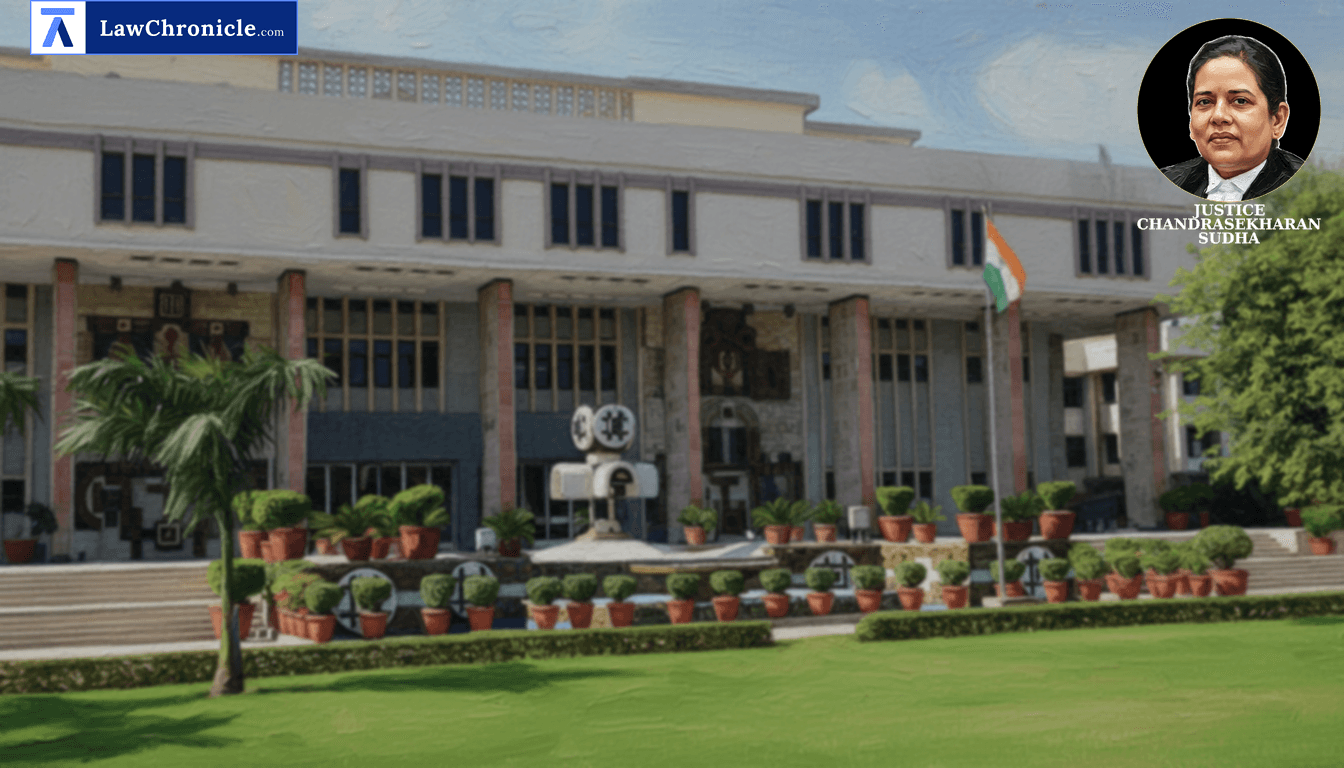
The Delhi High Court, in State (NCT of Delhi) v. Mahavir Singh, reaffirmed that the mere use of terms such as “high speed” or “rash and negligent” is insufficient to sustain a conviction under Sections 279 and 304A of the Indian Penal Code, 1860, in the absence of concrete factual evidence demonstrating the manner of driving.
In a decision delivered by Justice Chandrasekharan Sudha, the Court dismissed the State's appeal against a trial court's order acquitting an accused tanker driver. The Court emphasized that in criminal trials, the burden of proving every essential element of a charge remains with the prosecution, and criminality cannot be presumed merely based on a vehicle's speed.
Establishing Criminal Negligence Under IPC
The Bench examined the requirements for sustaining a conviction under Sections 279 and 304A of the Indian Penal Code, 1860. It noted that while Section 279 deals with rash or negligent driving that endangers human life, Section 304A applies to acts that directly cause death without the intention or knowledge associated with culpable homicide. Referring to Naresh Giri v. State of Madhya Pradesh ( "(2008) 1 SCC 791": 2007 CaseBase(SC) 573), the Court noted that Section 304A is directed at offenses outside the range of Sections 299 and 300 of the Indian Penal Code, 1860.
The Concept of Reasonable Care and Rashness
Citing Alister Anthony Pareira Vs. State of Maharashtra ( "(2012) 2 SCC 648": 2012 CaseBase(SC) 120), the Court observed that criminal negligence occurs when there is a 'gross and culpable' failure to exercise required care. The Court, in its reasoning, observed: "Negligence is the omission to do something which a reasonable man, guided upon the considerations which ordinarily regulate the conduct of human affairs, would do, or, the doing of something which a prudent and reasonable man would not do."
Limitations of 'High Speed' as Evidence
The prosecution had primarily relied on the testimony of a single eye-witness (PW6), who claimed the tanker was at a "very high speed." However, the Court pointed out that high speed is a relative term and does not inherently prove negligence. Relying on State of Karnataka v. Satish ( "1998 (8) SCC 493": 1996 CaseBase(SC) 2197), the Court held that the legal maxim 'res ipsa loquitur' (the thing speaks for itself) cannot be invoked to presume rashness in the absence of materials like the exact position of the deceased or the width of the road.
Justice Sudha further reiterated the principles established in Partap v. State of U.P. and Vijayee Singh v. State of Uttar Pradesh, stating that the presumption of innocence remains in favor of the accused until the prosecution proves its case beyond reasonable doubt.
Background:
The case dates back to September 1999, when a tanker lorry allegedly hit a Constable who was crossing the road at Nangloi Chowk. The Constable succumbed to his injuries. The prosecution alleged that the respondent, Mahavir Singh, was driving the vehicle in a rash and negligent manner, subsequently fleeing the spot. Charges were framed under Sections 279 and 304A of the Indian Penal Code, 1860, and Sections 134 and 187 of the Motor Vehicles Act, 1988.
The trial court acquitted the accused in 2015, questioning the credibility of the sole eye-witness. The High Court, in the present appeal, found no perversity in the trial court's view, noting that the site plan was silent on crucial details like skid marks or blood stains, and there was no clarity regarding the vehicle used by the witness to chase the accused.
Case Details:
Case No.: CRL.A. 214/2018
Case Title: STATE (NCT of DELHI) v. MAHAVIR SINGH
Appearances:
For the Petitioner(s): Mr. Utkarsh, APP for the State with SI Rajender Singh, PS Nangloi.
For the Respondent(s): Mr. Abhinav Sekhri and Mr. Aru Vashisht, Advocates
Source: 2026 CaseBase(DEL) 329
 Breaking News


