


HP High Court Upholds Acquittal Citing Material Contradictions and Site Plan Discrepancies
 Copy Link
 Share
 Save
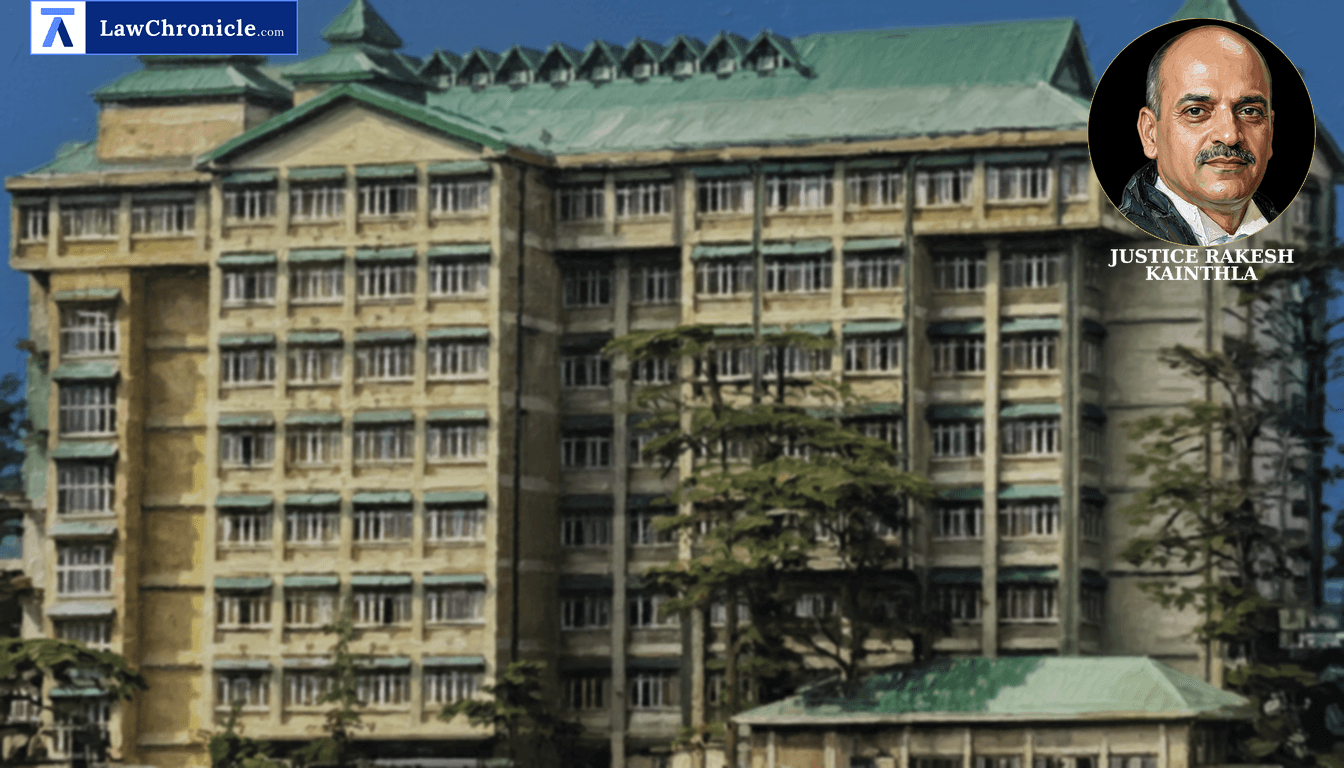
The Himachal Pradesh High Court has reinforced the sanctity of acquittal orders, ruling that appellate interference is impermissible when a trial court's view is reasonable and supported by site evidence that contradicts the prosecution’s narrative. The court emphasized that minor testimonial variations, when coupled with physical evidence suggesting the victim's own negligence, create a robust double presumption of innocence that cannot be easily displaced.
In an appeal preferred by the State, the Single Judge bench of Hon’ble Mr Justice Rakesh Kainthla presided over the matter challenging a 2014 acquittal in a fatal motor vehicle accident case. The Court was tasked with determining whether the Trial Court had erred in its appreciation of evidence concerning alleged negligent driving under the Indian Penal Code and the Motor Vehicles Act.
Key Takeaways
Reinforcement of Innocence
An acquittal by a competent court strengthens the initial presumption of innocence, requiring an even higher threshold of perversity for appellate reversal.
Primacy of Physical Evidence
Site plans prepared during investigation carry significant weight, especially when they contradict oral testimonies regarding the 'wrong side' of the road.
Material Contradictions Fatal
Discrepancies regarding whether victims were riding a vehicle or walking are not 'minor' and can lead to the total rejection of eyewitness accounts.
Appellate Restraint
If two reasonable views are possible, the appellate court must defer to the view favorable to the accused, even if the court could potentially reach a different conclusion.
Judicial Scrutiny of Witness Credibility
The Court observed that the prosecution witnesses significantly departed from the initial version recorded in the FIR. While the police case asserted four persons were riding the motorcycle, key witnesses testified during the trial that two individuals were walking. The Court, in its reasoning, observed: "It is apparent from the testimonies of these witnesses that they have changed the prosecution version completely, because it was nobody's case that Dharmender and Anil were walking on the road. It was specifically stated that all four persons were riding the motorcycle. Therefore, the testimonies of these witnesses regarding the accident were rightly rejected by the learned Trial Court."
Furthermore, the Court noted that the site plan (Ext. PW-13/D) placed the accident at a point suggesting the motorcycle had veered into the path of the utility vehicle. The Court highlighted: "The learned Trial Court had rightly held that this site plan shows that the utility was on its left side, whereas the motorcycle had left its side and had gone towards the right side of the road. Thus, the proximate cause of the accident was driving the motorcycle towards the right side of the road, and not driving the utility towards the wrong side of the road, as was projected by the prosecution."
Court Directions
The Court has following directions:
"In view of the provisions of Section 437-A of the Code of Criminal Procedure (Section 481 of Bhartiya Nagarik Suraksha Sanhita, 2023) the respondent/accused is directed to furnish bail bonds in the sum of ₹25,000/- with one surety in the like amount to the satisfaction of the learned Trial Court within four weeks, which shall be effective for six months with stipulation that in the event of Special Leave Petition being filed against this judgment, or on grant of the leave, the respondent/accused on receipt of notice thereof, shall appear before the Hon’ble Supreme Court."
Ratio
An appellate court shall not interfere with an order of acquittal unless the findings of the Trial Court are impossible, perverse, wholly unsustainable, or manifestly illegal. When two reasonable conclusions are possible based on the evidence, the one favoring the accused must prevail, particularly as the presumption of innocence is reinforced by the acquittal. Standing evidence such as site plans that contradict the oral testimony of prosecution witnesses provides a valid basis for a Trial Court to entertain reasonable doubt.
Background
The case originated from a 2007 accident where a utility vehicle allegedly hit a motorcycle, resulting in two deaths and several injuries. The State charged the respondent under Sections 279, 337, 338, and 304A of the Indian Penal Code and Section 187 of the Motor Vehicles Act. The Trial Court acquitted the accused in 2014, citing contradictions in witness statements and the lack of a clear establishment of the accident spot as alleged by the police. The State appealed, arguing that the testimonies of the injured witnesses clearly established negligence. However, the High Court, relying on the principles in Sanjay Kumar v. State of Bihar ( "2026 SCC OnLine SC 1373": 2026 CaseBase(SC) 681), Kali Ram v. State of Himachal Pradesh ( "(1973) 2 SCC 808": 1973 CaseBase(SC) 41), and Ghurey Lal v. State of Uttar Pradesh ( "(2008) 10 SCC 450": 2008 CaseBase(SC) 894), found that the Trial Court’s view was a reasonable one and dismissed the appeal.
Case Details:
Case No.: Cr. Appeal No. 26 of 2015
Neutral Citation: 2026:HHC:46977
Case Title: State of H.P. Versus Sushil Kumar
Appearances:
For the Petitioner(s): Mr Jitender Sharma, Additional Advocate General.
For the Respondent(s): Mr Parikshit Sharma, Advocate.
Source: 2026 CaseBase(HP) 11145
Similar Articles
 Breaking News


