


Private Banks Not Amenable To Writ Jurisdiction In SARFAESI Actions: Kerala High Court
 Copy Link
 Share
 Save
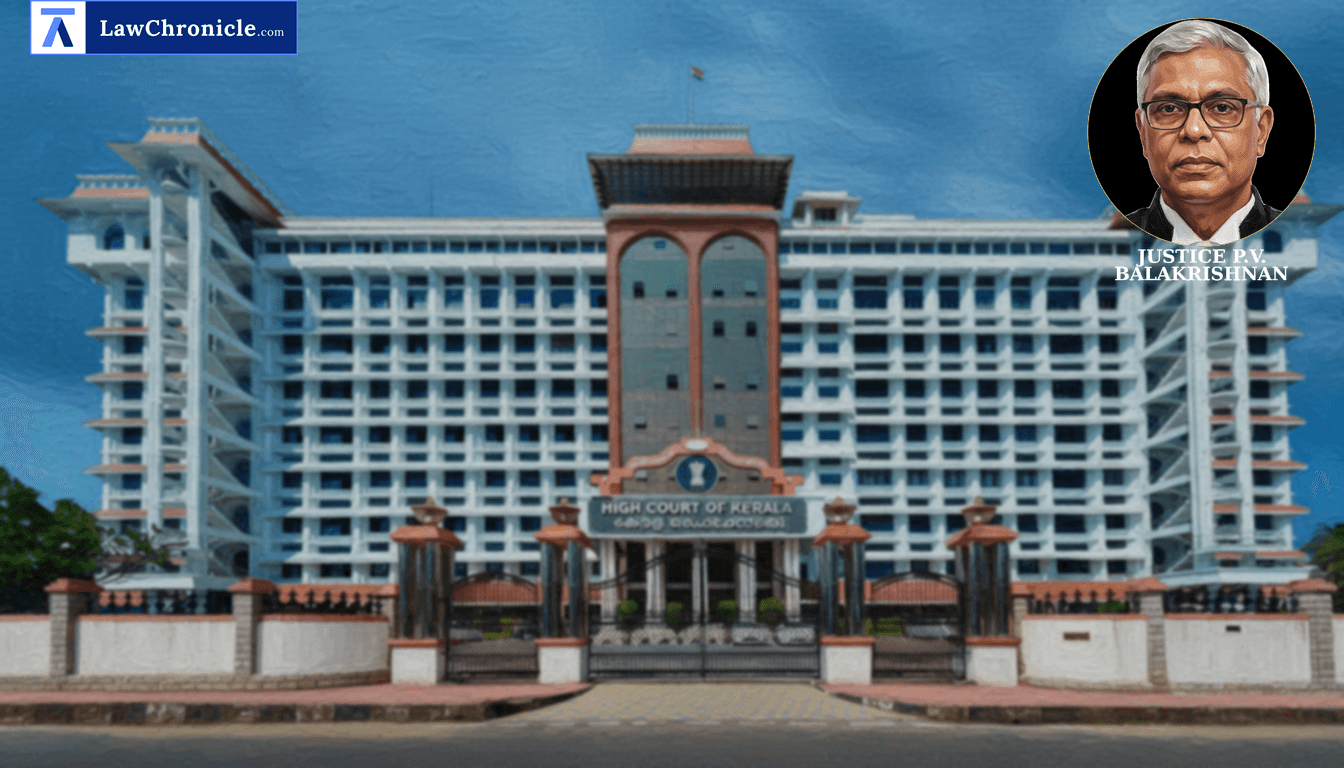
The Kerala High Court has reaffirmed that private scheduled banks do not perform public or statutory duties, making them immune to writ petitions challenging recovery actions initiated under the Securitisation and Reconstruction of Financial Assets and Enforcement of Security Interest Act, 2002. In a significant ruling, the Court emphasized that even if regulatory guidelines or welfare legislations like the Micro, Small and Medium Enterprises Development Act, 2006 apply, they do not transform a private entity into a 'State' under the Constitution of India, 1950.
A single-judge bench of Justice P. V. Balakrishnan dismissed the petitions filed by a principal debtor and a guarantor who sought to stall coercive recovery measures. The petitioners contended that The Federal Bank Ltd-Bank failed to comply with mandatory notifications regarding stressed accounts for Micro, Small, and Medium Enterprises before proceeding with asset seizure.
Functionality Over Regulatory Compliance
The Court observed that the mere fact that a private bank is regulated by the Reserve Bank of India or must follow specific statutory guidelines does not make it an instrumentality of the State. The bench highlighted that the 'function' test is the primary determinant for maintainability under the Constitution of India, 1950.
The Court, in its reasoning, observed: "...a private company carrying on banking business as a scheduled bank cannot be considered as a company carrying on any public function/public duty/statutory duty, and therefore, a writ under Article 226 of the Constitution of India will not lie against them. It is also held that merely because a statute or a rule having the force of a statute requires a company or some other body to do a particular thing, it does not possess the attribute of a statutory body."
Availability of Alternate Remedy Under Section 17
The Court further noted that the petitioners had an efficacious alternative remedy. Instead of invoking the extraordinary jurisdiction of the High Court, the appropriate forum for challenging recovery proceedings is the Debt Recovery Tribunal.
The Court has the following directions:
"Ergo, I find that these writ petitions are not maintainable, and they are accordingly dismissed. All pending IAs in the writ petitions will also remain closed."
Background:
The dispute arose after the petitioner, proprietor of 'VKS Combines', defaulted on a loan for which four items of immovable property were mortgaged. The establishment was registered under the Micro, Small and Medium Enterprises Development Act, 2006 during the pandemic. Following a default, the bank declared the account as a Non-Performing Asset (NPA) on February 22, 2023, and issued a demand notice under Section 13(2) of the Securitisation and Reconstruction of Financial Assets and Enforcement of Security Interest Act, 2002.
The petitioners argued that the bank was duty-bound to refer the stressed account to a committee for revival and rehabilitation as per Micro, Small and Medium Enterprises Development Act, 2006 notifications. They relied on Pro Knits (M/s.) v. Board of Directors of Canara Bank ( "(2024) 10 SCC 292": 2024 CaseBase(SC) 269) and Shri Shri Swami Samarth Construction & Finance Solution v. Board of Directors of NKGSB Co-op. Bank Ltd. ( "2025 SCC OnLine 1566": 2025 CaseBase(SC) 749) to argue that the bank's failure to perform this statutory duty warranted judicial intervention. The petitioners also cited Andi Mukta Sadguru Shree Muktajee Vandas Swami Suvarna Jayanti Mahotsav Smarak Trust & Ors. v. V.R. Rudani & Ors. ( "1989 SCC OnLine SC 176": 1989 CaseBase(SC) 369) to argue that writ jurisdiction extends to any body performing a public duty.
Conversely, the respondent-bank, citing Federal Bank Ltd. v. Sagar Thomas & others, Shobha S. v. Muthoot Finance Ltd., and South Indian Bank v. M/s. PDMC Industries, argued that as a private company, it is not amenable to writ jurisdiction. They further pointed out that the petitioners had previously approached the Court and the Supreme Court without raising these specific MSME-related contentions, invoking the Henderson principle of 'constructive res judicata'. The bank also informed the Court that a committee had eventually considered and rejected the petitioner's revival proposal as non-viable.
Case Details:
Case No.: WP(C) NO. 36978 OF 2025 & WP(C) NO. 3278 OF 2026
NeutralCitation: 2026:KER:41848
Case Title: Satheesh V.K. vs Ministry of Micro Small and Medium Enterprises & Ors.
Appearances:
For the Petitioner(s): Sri. Shashank Devan, Sri. K.M. Aneesh, Sri. Adarsh Kumar, Sri. MKS. Menon, Advs.
For the Respondent(s): Smt. R. Asalatha Varma (CGC), Shri. Mohan Jacob George, Smt. P.V. Parvathy, Smt. Reena Thomas, Smt. Nigi George, Advs.
Source: 2026 CaseBase(KER) 337
Similar Articles
 Breaking News


