State Cannot Insist on Marriage Certificate If Civil Court Declares Legal Heirship: Jammu & Kashmir HC
 Copy Link
 Share
 Save
In a decisive victory for the rights of windows, the High Court of Jammu & Kashmir and Ladakh has ruled that statutory authorities cannot mandatorily demand a marriage certificate for disbursing service benefits when a competent civil court has already issued a formal declaration of legal heirship. The Court effectively stripped away bureaucratic hurdles, holding that judicial decrees regarding a person’s marital status and inheritance rights must be accorded full legal weight by government departments.
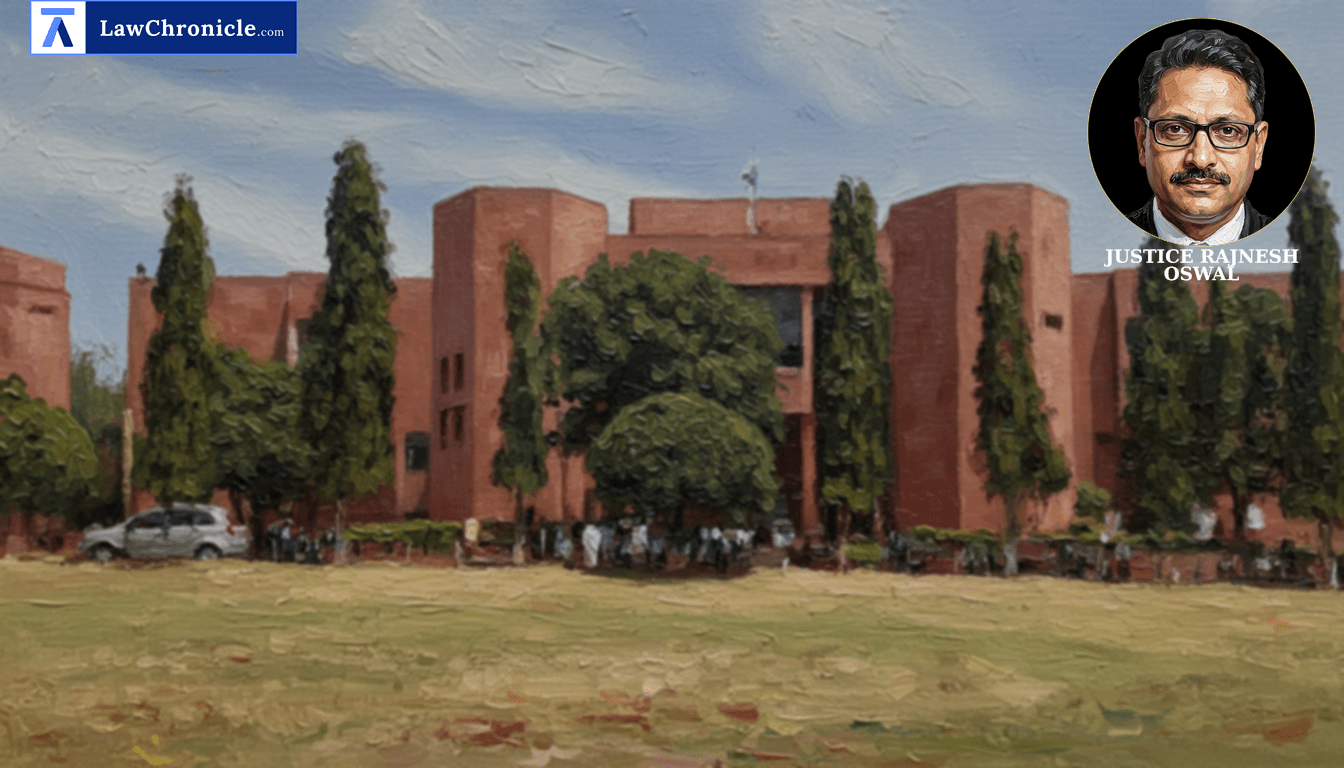
Justice Rajnesh Oswal adjudicated the petition where a woman, accused and subsequently exonerated of abetting her husband’s suicide, was denied retiral benefits by the Indo-Tibetan Border Police (ITBP) due to the absence of a marriage certificate. The bench held that the statutory suspension of benefits during criminal trials is only temporary and must cease immediately upon acquittal or discharge.
Invalidity of Statutory Embargo Post-Acquittal
The Court scrutinized the application of Rule 54(11-C) of the CCS (Pension) Rules, 1972, which allows for the suspension of family pension if a claimant is charged with murdering or abetting the murder of the government servant. The Court clarified that this embargo is not permanent.
The Court, in its reasoning, observed: "The aforesaid rules provides that where a person otherwise entitled to family pension is charged with the offence of murdering the Government servant or abetting such offence, payment of family pension shall remain suspended till the conclusion of the criminal proceedings. The Rule itself, however, further provides that where such person is acquitted, family pension shall become payable from the date of death of the Government servant. The embargo contemplated under Rule 54(11-C) of CCS Pension Rules, therefore, is not permanent but only temporary and continues only till the criminal proceedings attain finality."
Judicial Recognition of Legal Heirship
Although the petitioner faced prosecution under Section 306 of the Indian Penal Code, 1860, she was discharged by the trial court, a decision upheld in UT of J&K through Police Station, Rajbagh v. Neelam Devi and subsequently in Kunti Devi v. Neelam Devi and another. Furthermore, she obtained a civil decree declaring her the legal heir of the deceased constable.
Court Observations on Executive Insistence
Addressing the respondents' demand for specific documents despite the judicial findings, the Court noted: "Once a competent civil court has declared the petitioner to be the legal heir of the deceased government servant and the said declaration continues to hold the field, the respondents are bound to accord due weight and effect to the same. In the absence of any material to show that the aforesaid judgment of discharge, has been stayed, set aside, or otherwise rendered inoperative by any competent court, and in the light of the judgment of the civil court, the respondents cannot ignore their legal effect or insist upon production of a marriage certificate as a condition precedent for processing the claim."
The Court has the following directions:
"(a) The respondents are directed to consider the petitioner's claim for release of all admissible service and retiral benefits, including family pension and other consequential benefits, strictly in accordance with the applicable rules.
(b) The respondents shall also consider the petitioner's claim for appointment on compassionate grounds in accordance with the policy governing the field, taking into consideration the decree issued by the civil court and without insisting upon the production of a marriage certificate, in view of the observations made hereinabove.
(c) The aforesaid exercise shall be completed and appropriate orders shall be passed by the competent authority within a period of six weeks from the date of receipt of a copy of this judgment. Needless to observe, if any other document, not inconsistent with the observations made hereinabove and otherwise permissible under the applicable rules, is required for processing the petitioner's claims, the petitioner shall furnish the same and extend full cooperation to the respondents. The decision so taken shall be communicated to the petitioner forthwith."
Key Takeaways
Civil Decrees Overrule Administrative Prerequisites
A declaration of legal heirship by a civil court is binding on state authorities and supersedes the requirement for individual documents like marriage certificates for service benefits.
Temporary Nature of Statutory Suspensions
Provisions that suspend benefits due to pending criminal cases under the CCS (Pension) Rules, 1972 are temporary; full benefits must be released retrospectively upon the claimant's exoneration.
Protection Against Arbitrary Demands
Government departments cannot insist on specific evidentiary documents (like marriage cards) when the underlying relationship has been verified through a judicial process of discharge and civil adjudication.
Ratio
A state authority cannot legally insist upon the production of a marriage certificate as a condition precedent for the disbursement of service benefits or compassionate appointment when a competent civil court has already issued a decree declaring the claimant as the legal heir. Furthermore, any suspension of benefits under Rule 54(11-C) of the CCS (Pension) Rules must terminate upon the finality of an acquittal or discharge in related criminal proceedings.
Background:
The petitioner was the wife of a Constable (GD) in the ITBP who died by suicide in 2019. Following his death, his family alleged abetment, leading to an FIR under Section 306 IPC. During the pendency of these proceedings, the ITBP withheld service benefits, citing Rule 54(11-C) of the CCS (Pension) Rules. The petitioner was subsequently discharged by the Principal Sessions Judge, Kathua, and this discharge was upheld by the High Court. She also secured a civil decree from the Court of Munsiff, Hiranagar, declaring her the legal heir. Despite this, the respondents refused to process her claim for family pension and compassionate appointment without a marriage certificate, prompting the current writ petition. The High Court allowed the petition, directing the respondents to process all claims within six weeks.
Case Details:
Case No.: WP(C) No. 3122/2025
NeutralCitation: 2026:JKLHC-JMU:2142
Case Title: Neelam Devi v. Union of India and others
Appearances:
For the Petitioner(s): Mr. Jagpaul Singh, Advocate
For the Respondent(s): Mr. Vishal Sharma, DSG (Sr. Adv.) with Mr. Karan Sharma, CGSC
Source: 2026 CaseBase(JK) 6
Similar Articles
 Breaking News