Stop-Gap Deputation to Public Office Not Usurpation If Eligibility Criteria Met: Jharkhand HC
 Copy Link
 Share
 Save
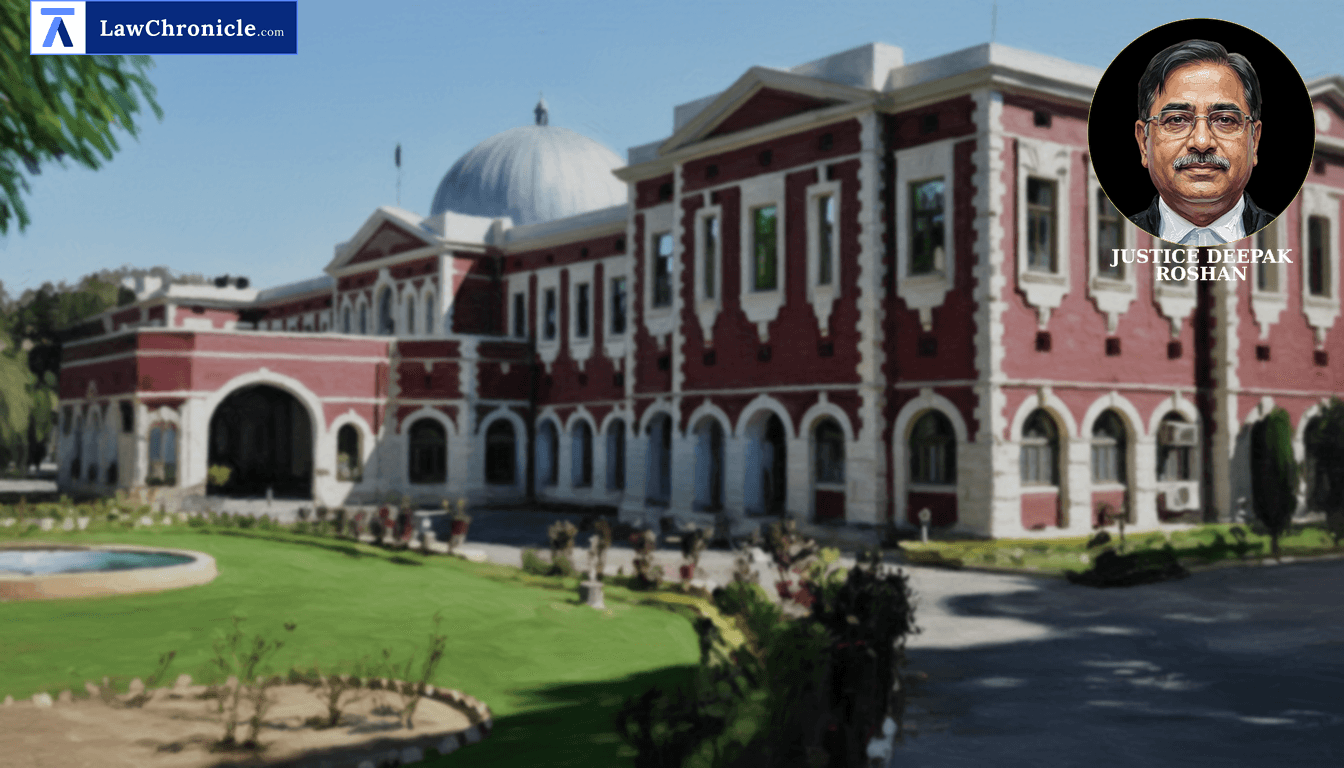
The Jharkhand High Court has fortified the state's executive power to make stop-gap arrangements for essential public offices, ruling that deputing qualified individuals to statutory posts pending regular recruitment does not constitute a 'usurpation' of office. This decision clarifies that a writ of quo warranto cannot be weaponized against administrative necessities if the incumbents possess the prescribed statutory qualifications.
Justice Deepak Roshan presided over the matter, hearing a challenge against the deputation of several Motor Vehicle Inspectors (MVIs) in various districts of Jharkhand. The petitioner sought a writ of quo warranto against the private respondents, alleging that their posting was contrary to cadre rules and a prior judicial direction.
Key Takeaways
Executive Authority Upheld
State governments retain the permissible authority to ask eligible officers to hold charge of a post until it is filled through regular recruitment processes.
Quo Warranto Limitations
Courts will not intervene via quo warranto unless it is proven that the office holder lacks the legal authority or the prescribed eligibility criteria under the statutory rules.
Stop-Gap Measures Validated
Temporary deputations are not considered a substitute for regular recruitment if the state demonstrates active steps toward filling sanctioned posts permanently.
Court's Analysis on Writ of Quo Warranto
The Court extensively analyzed the judicial boundaries regarding the issuance of a writ of quo warranto. Referencing the principles laid down in University of Mysore versus C.D. Govindra Rao ( "(1964) 4 SCR 575": 1963 CaseBase(SC) 219), the bench noted that such a writ is intended to protect the public from usurpers of public office. However, the Court emphasized that this jurisdiction is limited. Citing High Court of Gujarat versus Gujarat Kishan Mazdoor Panchayat ( "(2003) 4 SCC 712": 2003 CaseBase(SC) 50) and B. Srinivasa Reddy versus Karnataka Urban Water Supply & Drainage Board Employees’ Assn., the bench observed that the court cannot sit in judgment over the wisdom of the Government's choice as long as the appointee is eligible.
Regarding the specific challenge under the Motor Vehicles Act, 1988, the Court found that the private respondents fulfilled the eligibility criteria as per the MVI Cadre Rules, 2010. The Court, in its reasoning, observed: "So long as the incumbent possesses the prescribed qualifications and is otherwise eligible, the Court cannot not sit in judgment over the choice made by the State Government. An arrangement under which the employer asks an eligible person to hold charge of a post until it is regularly filled, is within the employers’ permissible authority."
Compliance with Prior Judicial Mandates
The petitioner had relied on a 2015 order of the High Court to argue that such deputations were prohibited. However, the Court clarified that the previous direction only prohibited the deputation of 'incompetent' persons. Since the current respondents were qualified, there was no breach. The Court further noted that out of 70 sanctioned posts, 50 had already been filled through regular recruitment, proving the deputation was a genuine stop-gap measure.
The Court has following directions:
"For the reasons recorded above, this court finds that there is no ground for seeking a writ of quo-warranto by the petitioner as the respondent No.4 is a regularly appointed MVI, and the respondent No.5 to 10 possess the prescribed qualifications and are discharging the duties of MVI on deputation as stop gap arrangement. Accordingly, the writ petition stands dismissed."
Ratio
A writ of quo warranto is maintainable only if a public office is held by a person lacking legal authority or prescribed eligibility. An administrative arrangement where an employer directs an eligible officer to hold charge of a post as a stop-gap measure until regular recruitment is completed does not amount to usurpation of public office and falls within the permissible authority of the State.
Background
The dispute originated when the petitioner challenged the Office Order dated March 17, 2026, which deputed several individuals to the post of Motor Vehicle Inspector across various districts. The petitioner contended that these appointments bypassed the MVI Cadre Rules, 2010 and the MVI Cadre Rules, which allegedly required recruitment only through the Jharkhand Staff Selection Commission. The State countered that the deputations were necessary for administrative efficiency and that the candidates met all qualifications specified in the 2020 amendment to the rules. Following the precedent in Central Electricity Supply Utility of Odisha versus Dhobei Sahoo ( "(2014) 1 SCC 161": 2013 CaseBase(SC) 513), the Court held that such arrangements are legally sound. Consequently, the High Court dismissed the petition, finding no lack of eligibility or violation of statutory rules.
Case Details:
Case No.: W.P (S) No. 3641 of 2026
Neutral Citation: 2026:JHHC:32271
Case Title: Sunil Kumar Mahto v. The State of Jharkhand & Ors.
Appearances:
For the Petitioner(s): Mr. Sumeet Gadodia, Adv
For the Respondent(s): Mr. Indrajit Sinha, Adv., Mr. Arpan Mishra, Adv.
For the Resp.-State: Mr. K.K.Singh, S.C.-V, Mr. Krishna Prajapati, AC to SC-V
Source: 2026 CaseBase(JHKD) 3392
Similar Articles
 Breaking News